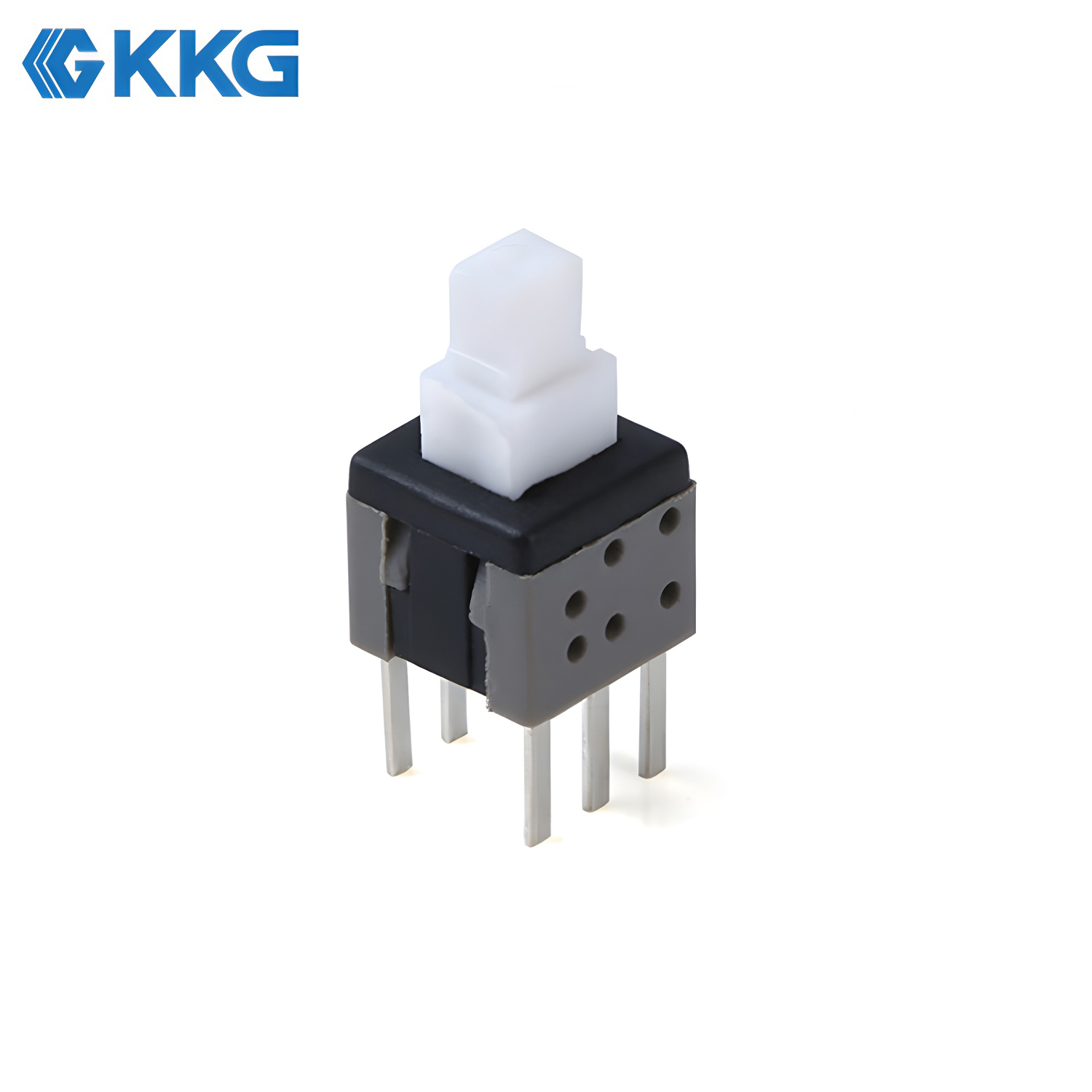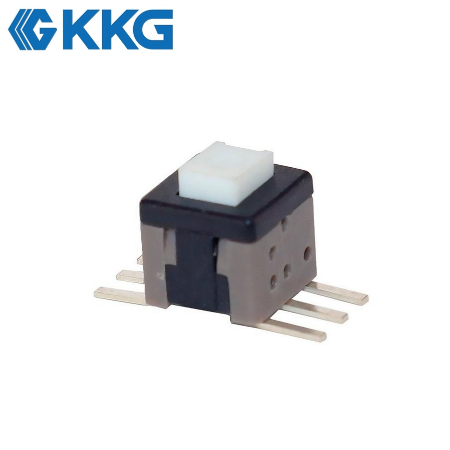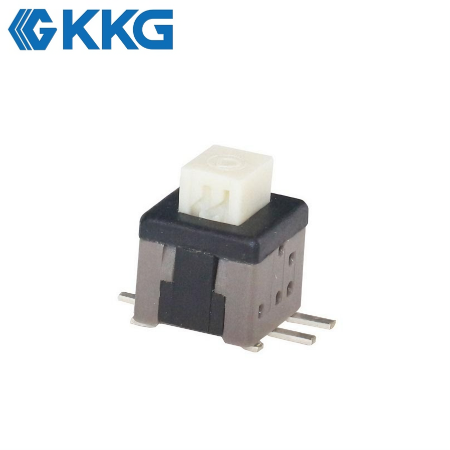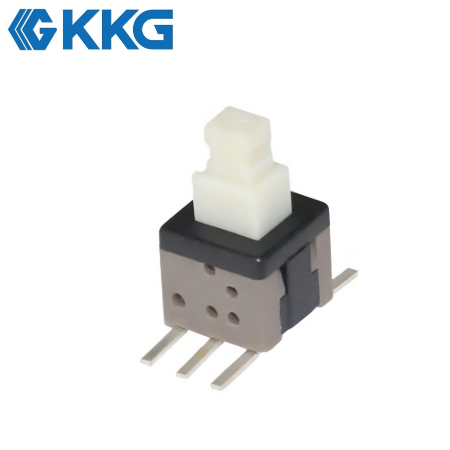


Product Brief Description
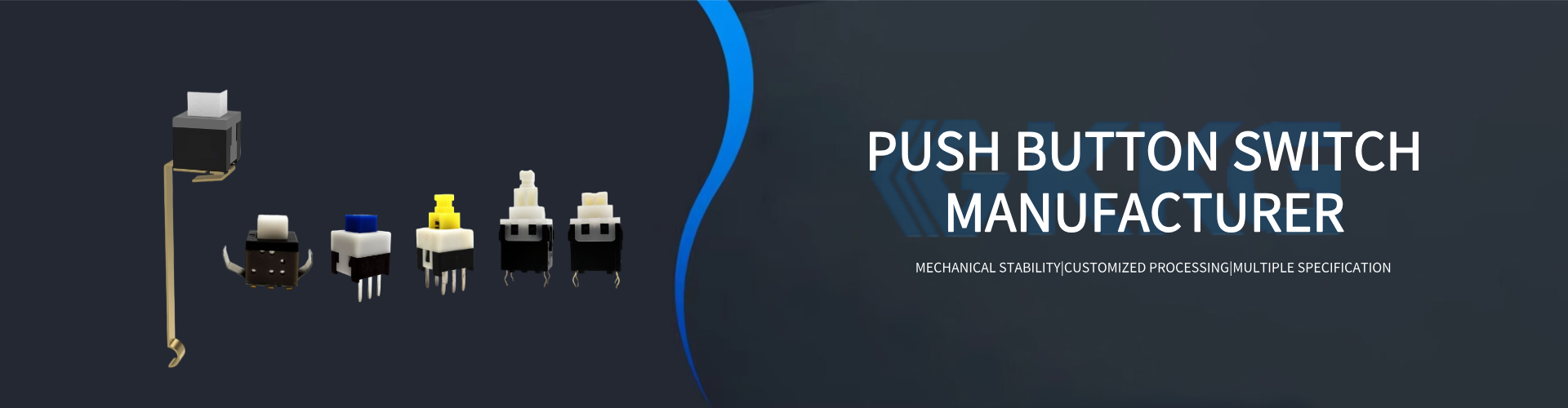
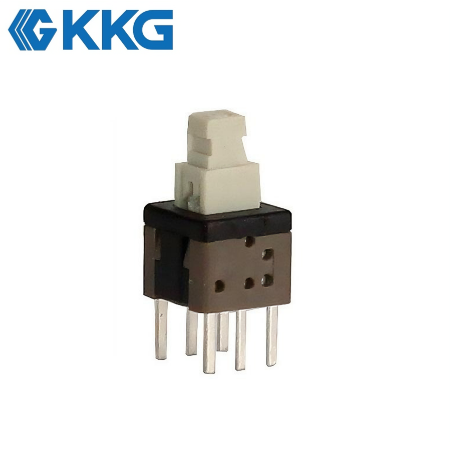
This pushbutton switch features a compact 5.8×5.8mm footprint and DPDT dual-pole characteristics, making it widely applicable in scenarios requiring dual-channel synchronous instantaneous control, such as medical equipment and automotive electronics.
 ODM/OEM Service
 Source Factory
 Stable Daily Output
 High Quality
 Multiple Payment Methods
 Pre/After Service
Self-reset Push Button Switches' Display

Product Structure of Pushbutton Switches

This push switch features a compact 5.8×5.8mm square package specifically designed for high-density PCBs. Its core structure is as follows:
| Structural Hierarchy | Core Components | Functional Role |
| Operation and Reset | Button cap, insulated push rod, reset spring | Transmits push force, rapidly resets contacts upon release, no mechanical self-locking mechanism |
| Electrical Core | Two sets of independent DPDT contacts | Each circuit includes a common terminal (COM) and a normally open terminal (NO). Dual circuits operate synchronously to achieve double-pole double-throw switching. |
| Encapsulation and Pins | Flame-retardant insulated housing, 6 through-hole pins | Two symmetrical rows (3 pins per row), through-hole design for enhanced PCB retention strength and electrical connection reliability |
Operating Principle of Momentary Pushbutton Switch
This push switch is a non-latching momentary-action type, maintaining conduction only when pressed and immediately resetting upon release:
1. Initial State (Unpressed)
The reset spring is extended, lifting the moving contact bracket. All circuits are open: COM1 and NO1, COM2 and NO2 are separated, forming open circuits on both paths.
2. Pressed State (Instantaneous Conduction)
Pressing the button overcomes spring force, pushing the plunger to simultaneously lower the moving contacts. Both circuits instantly close:
First Circuit: COM1 connects with NO1-1 and NO1-2;
Second circuit: COM2 connects with NO2-1 and NO2-2.
This state persists only while the button is held down; release immediately breaks the circuit.
3. Reset State (Release Disconnect)
Upon releasing the button, the reset spring releases its force, driving the push rod and contacts to rapidly snap back. Both circuits simultaneously open, immediately restoring the initial open circuit state.
Application Scenarios for 5.8 Pushbutton Switches

The compact 5.8×5.8mm size and DPDT dual-pole characteristics make it widely applicable in scenarios requiring dual-channel synchronous instantaneous control:
Medical Equipment: Temporary start/stop, mode switching, or function trigger buttons for diagnostic instruments and patient monitors.
Industrial control: Momentary operation, mode selection, or reset buttons for compact PLCs, test instruments, and handheld terminals.
Communications and electronics: Temporary signal switching and test mode triggering for laser communication modules and semiconductor heat dissipation equipment.
Consumer electronics: Function switching, mode selection, or temporary control for smart appliances and portable devices.
Automotive electronics: Instantaneous trigger switches for in-vehicle entertainment systems and auxiliary control modules.
| Max. Current | 0.1A |
| Mechanical Life | 100000 times |
| Max. Voltage | 30V |
| Dielectric Strength | AC 500V for 1min |
| Operating Force | 250gf±80gf |
| IP level | NO |

Previous: SMD Push Button Switch
Next: Black Push Button Switch
Tel:
Add:
Rixing Industrial Zone,Tangxia Town, Dongguan City, Guangdong Province, China


Copyright © 2026 KKG ELECTRONICS ELECTRIC C0., LTD. All rights reserved
Privacy policy Cookie tracking