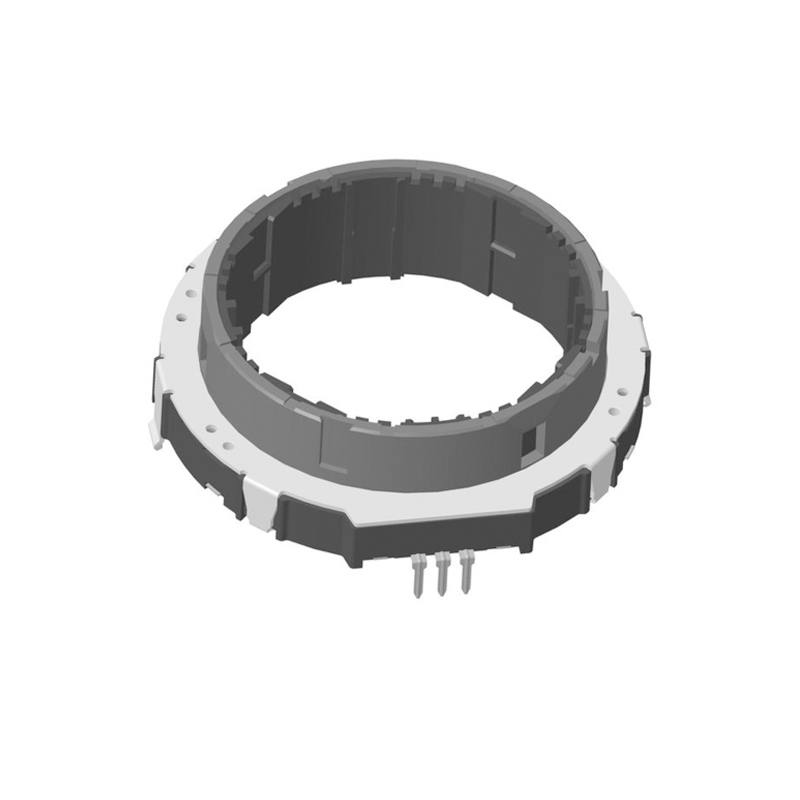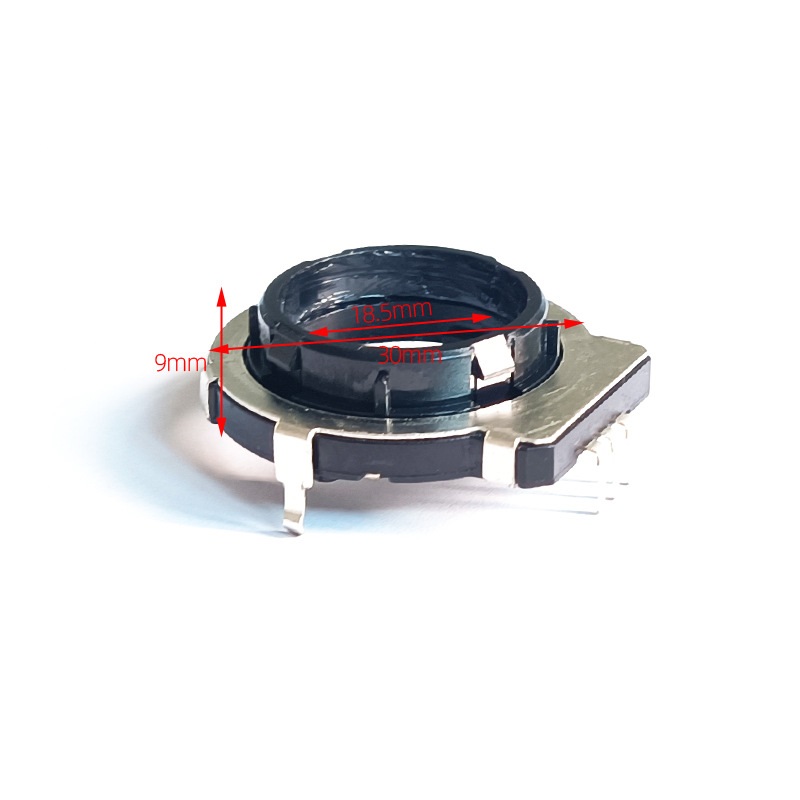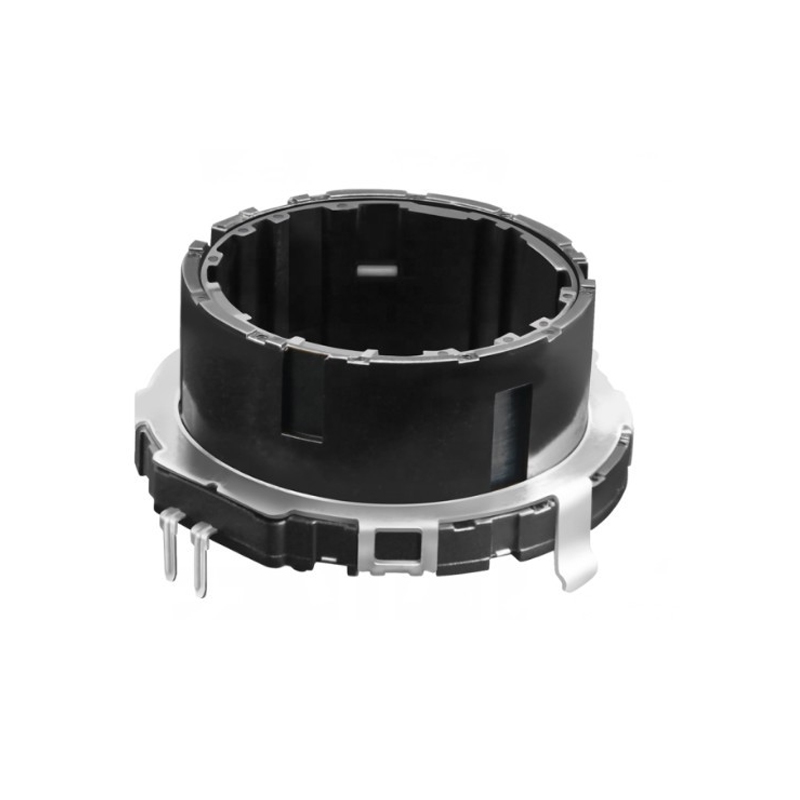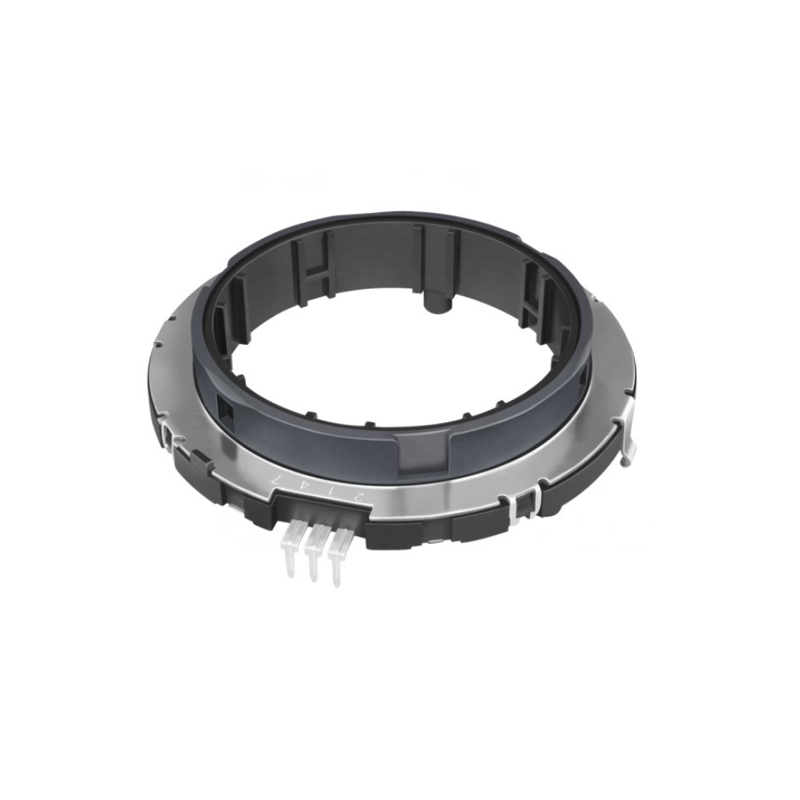
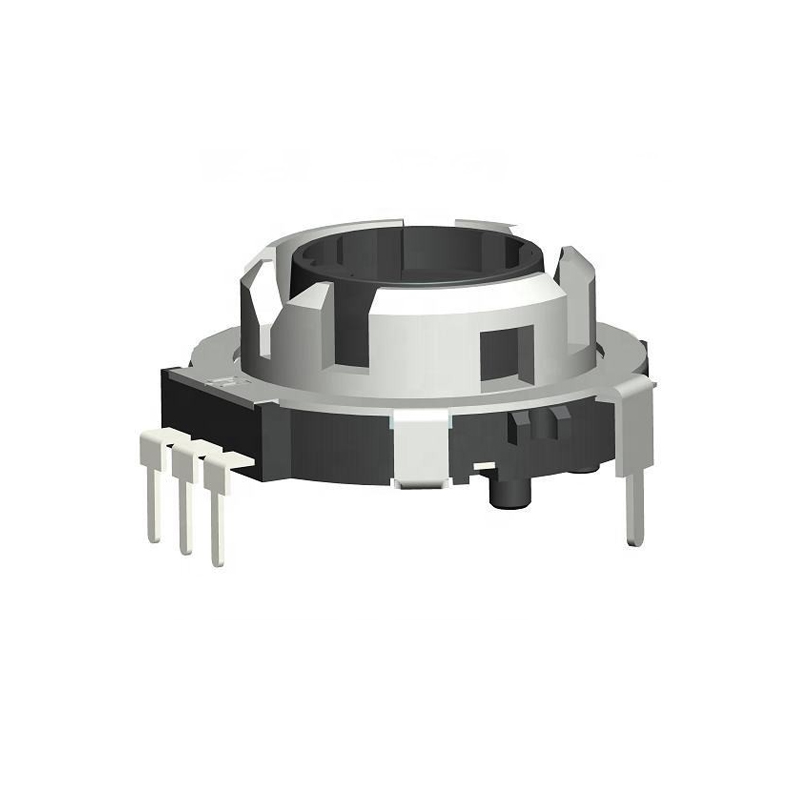
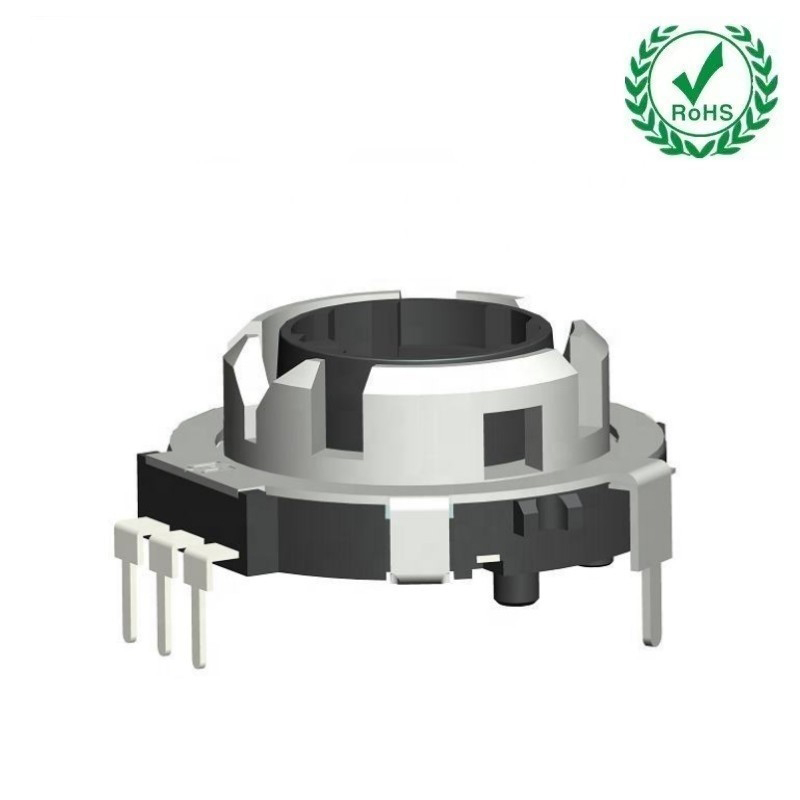
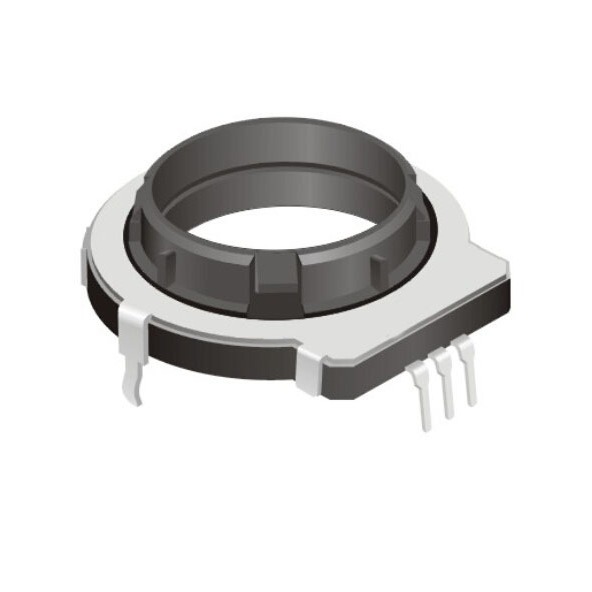
The EC21 Hollow Rotary Encoder is a compact incremental rotary encoder designed for electronic control interfaces that require accurate rotary input, tactile positioning, and reliable repeated operation. Featuring a Hollow Shaft structure, 360-degree rotation, multiple pulse and positioning configurations, and a customizable operating torque, the EC21 can be integrated into a wide range of consumer electronics and intelligent household appliances.
The EC21 can be used as an Alps-compatible rotary encoder for selected applications where a compact hollow rotary control is required. Its flexible configuration makes it suitable for products such as rice cookers, washing machines, home audio and video equipment, and other smart home appliances.
| Parameter | Specification |
|---|---|
| Product Model | EC21 |
| Product Type | hollow rotary encoder |
| Output Type | Incremental |
| Pulse / Position | 9/18, 15/30, 15/00, 20/20, 20/00 |
| Full Rotation Angle | 360° |
| Turning Moment | 3–24 mN·m (30–240 gf·cm) |
| Shaft Wobble | 0.7 × L / 30mm p-p Max. |
| Axial Push-Pull Strength | 80–100N (8–10kgf) Max. |
| Switching Force | 5 ± 2.5N |
| Maximum Operating Current | 10mA |
| Rated Power | DC 5V / 10mA |
| Insulation Resistance | 100MΩ Min. at 300V DC |
| Withstand Voltage | AC 300V for 1 Minute |
| Manual Soldering | 300℃ Max. / 3S Max. |
| Mounting Process | Reflow / SMT Process |
| Operating Temperature | -30℃ to +80℃ |
| Storage Temperature | -40℃ to +85℃ |
| Switch Life | 30,000 + 200 Cycles |
| Turning Life | 30,000 + 200 Cycles |
| Brand | KKG |
| Place of Origin | Guangdong, China |
| Certifications | ISO9001, ISO14001, ISO/TS16949, UL, RoHS, CQC |
| Packaging | Foam Box or Blister Box |
The EC21 adopts a hollow rotary structure that provides flexibility for mechanical integration. The design allows equipment manufacturers to develop compact control panels and integrate the encoder with different knobs or related mechanical components.
The EC21 uses an incremental output signal to detect rotary movement. As the knob rotates, the encoder generates electrical pulses that can be processed by the connected control system.
This makes it suitable for electronic adjustment functions such as temperature selection, cooking mode adjustment, washing program selection, volume control, and other user-interface applications.
Different electronic products may require different rotary resolutions and positioning characteristics. The EC21 provides several pulse and positioning combinations, including 9/18, 15/30, 15/00, 20/20, and 20/00.
This range allows manufacturers to select a configuration that matches their control circuit and desired user operating experience.
The EC21 supports 360-degree rotation, allowing the control knob to rotate continuously. This makes it suitable for applications where users need to adjust parameters upward or downward through repeated rotary movement.
The specified turning moment ranges from 3 to 24 mN·m, providing flexibility for different operating requirements. The appropriate torque can help manufacturers achieve the desired tactile feel and user experience.
The EC21 is designed with an axial push-pull strength of up to 80–100N. This provides mechanical resistance against axial forces that may occur during normal knob operation and equipment assembly.
The EC21 provides a specified switch life and turning life of approximately 30,000 + 200 cycles. For applications requiring a longer service life, customized long-life versions can be discussed according to customer requirements.
An incremental rotary encoder converts mechanical rotation into electrical signals. When the knob is turned, the internal contact mechanism changes between different electrical states, generating a sequence of pulses.
The connected electronic control system interprets these pulses to determine the direction and amount of rotary movement. Depending on the application, this information can be used to adjust temperature, select operating modes, control volume, navigate menus, or modify other product settings.
Unlike a simple potentiometer that provides an analog resistance value, an incremental encoder generates digital pulse information. This makes it particularly useful for modern electronic products controlled by microcontrollers and digital control systems.
The EC21 is well suited to smart home appliances where compact digital control interfaces are required. Household appliances increasingly use electronic control panels instead of traditional mechanical switches, creating demand for compact rotary input components.
For example, the EC21 can be integrated into rice cookers for selecting cooking modes, washing machines for choosing washing programs, or home audio and video equipment for adjusting volume and selecting functions.
The hollow structure provides flexibility for product designers, while multiple pulse and positioning configurations allow the encoder to be matched with different control requirements.
Rice Cookers: Used for cooking mode selection, temperature adjustment, and menu control.
Washing Machines: Suitable for selecting washing programs, operating modes, and other settings.
Home Audio Equipment: Can be used for volume adjustment, input selection, and menu navigation.
Home Video Equipment: Suitable for function selection and digital control interfaces.
Smart Home Appliances: Provides rotary input for various intelligent household devices.
Consumer Electronics: Can be integrated into compact electronic control panels.
Industrial Control Interfaces: Suitable for selected HMI and parameter adjustment applications.
| Application | Typical Function |
|---|---|
| Rice Cooker | Mode and parameter selection |
| Washing Machine | Program and function selection |
| Home Audio | Volume and menu control |
| Home Video | Menu navigation and adjustment |
| Smart Appliances | Digital parameter adjustment |
| Control Panels | Rotary user input |
For manufacturers looking for an Alps-compatible hollow encoder, the EC21 can be considered for applications with similar rotary control requirements. Its incremental output, multiple pulse configurations, hollow structure, and customizable characteristics provide flexibility for equipment manufacturers.
However, compatibility should always be confirmed based on the actual mechanical dimensions, electrical output, mounting configuration, pulse positioning, shaft structure, and control circuit requirements rather than relying only on the product name or appearance.
Different equipment manufacturers may require different rotary operating characteristics. The EC21 can be customized for specific applications, particularly when standard specifications do not fully meet the requirements of a new product.
Possible customization requirements may include shaft structure, rotary torque, pulse and positioning configuration, mechanical dimensions, operating life, and other application-specific characteristics.
For products requiring extended service life, long-life versions can be developed according to customer requirements. OEM customers should provide technical drawings, installation requirements, electrical specifications, expected operating cycles, and application conditions when requesting a customized solution.
Confirm whether the control system requires incremental digital output or another type of signal. The EC21 uses an incremental output configuration.
Select the appropriate pulse and positioning combination according to the required control resolution and tactile operating experience.
The required turning moment should match the desired knob feel. A lighter torque can provide easier adjustment, while a higher torque can provide stronger tactile resistance.
Check the shaft dimensions, shaft wobble, axial strength, mounting structure, and available installation space before integrating the encoder into the final product.
The EC21 has an operating temperature range of -30℃ to +80℃ and a storage temperature range of -40℃ to +85℃. Application conditions should remain within the appropriate specifications.
Consider the expected number of operating cycles when selecting an encoder. For applications requiring extended service life, a customized long-life version may be considered.
The EC21 is an incremental hollow rotary encoder designed for electronic control interfaces. It can be used in smart home appliances, consumer electronics, audio equipment, and other rotary control applications.
The EC21 supports several pulse and positioning configurations, including 9/18, 15/30, 15/00, 20/20, and 20/00.
Yes. The EC21 supports 360-degree rotation for continuous rotary adjustment.
The EC21 has an operating temperature range of -30℃ to +80℃.
The specified switch life and turning life are approximately 30,000 + 200 cycles. Longer-life products can be developed according to customer requirements.
The EC21 is mainly used in rice cookers, washing machines, home audio and video equipment, smart home appliances, and other electronic control products.
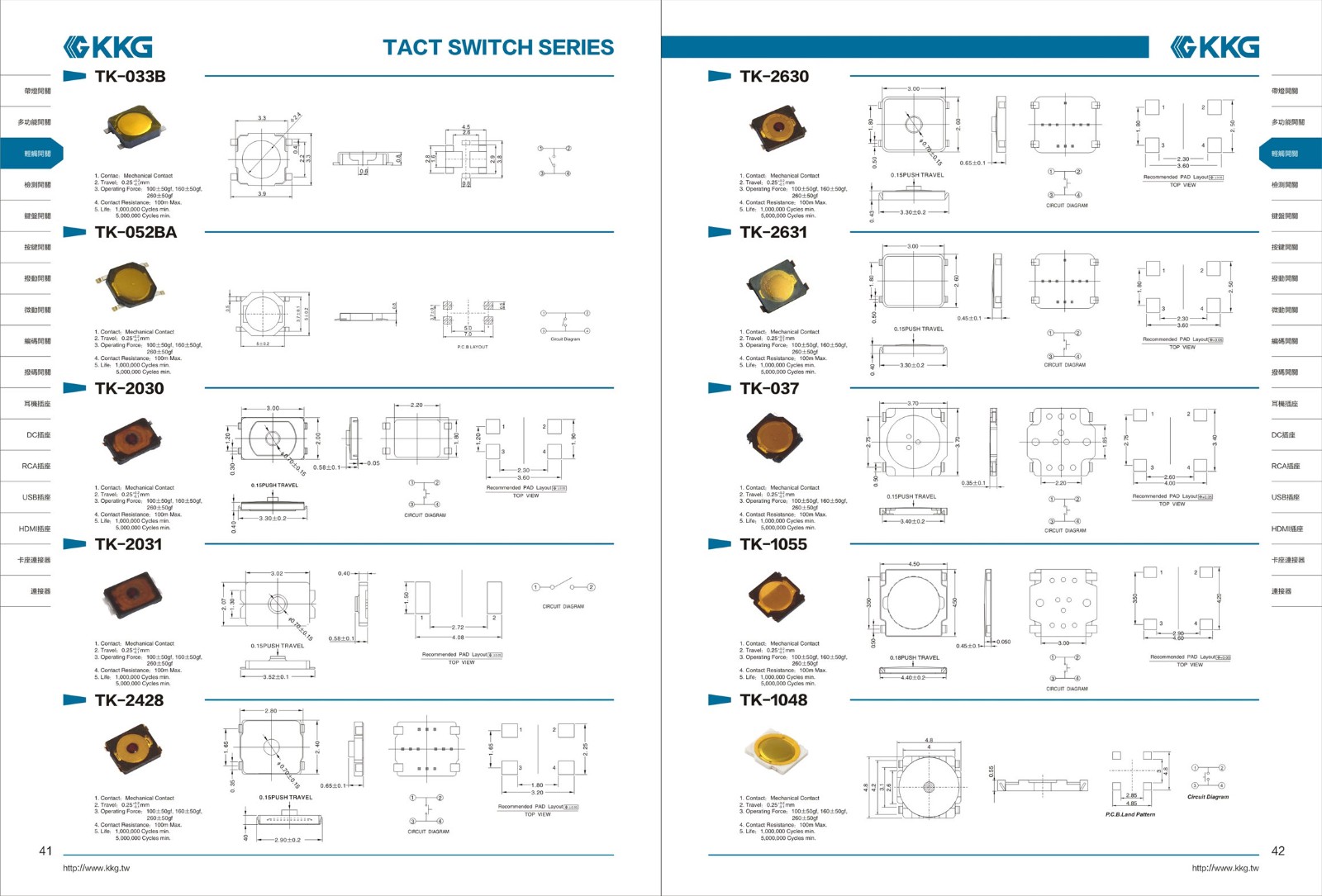
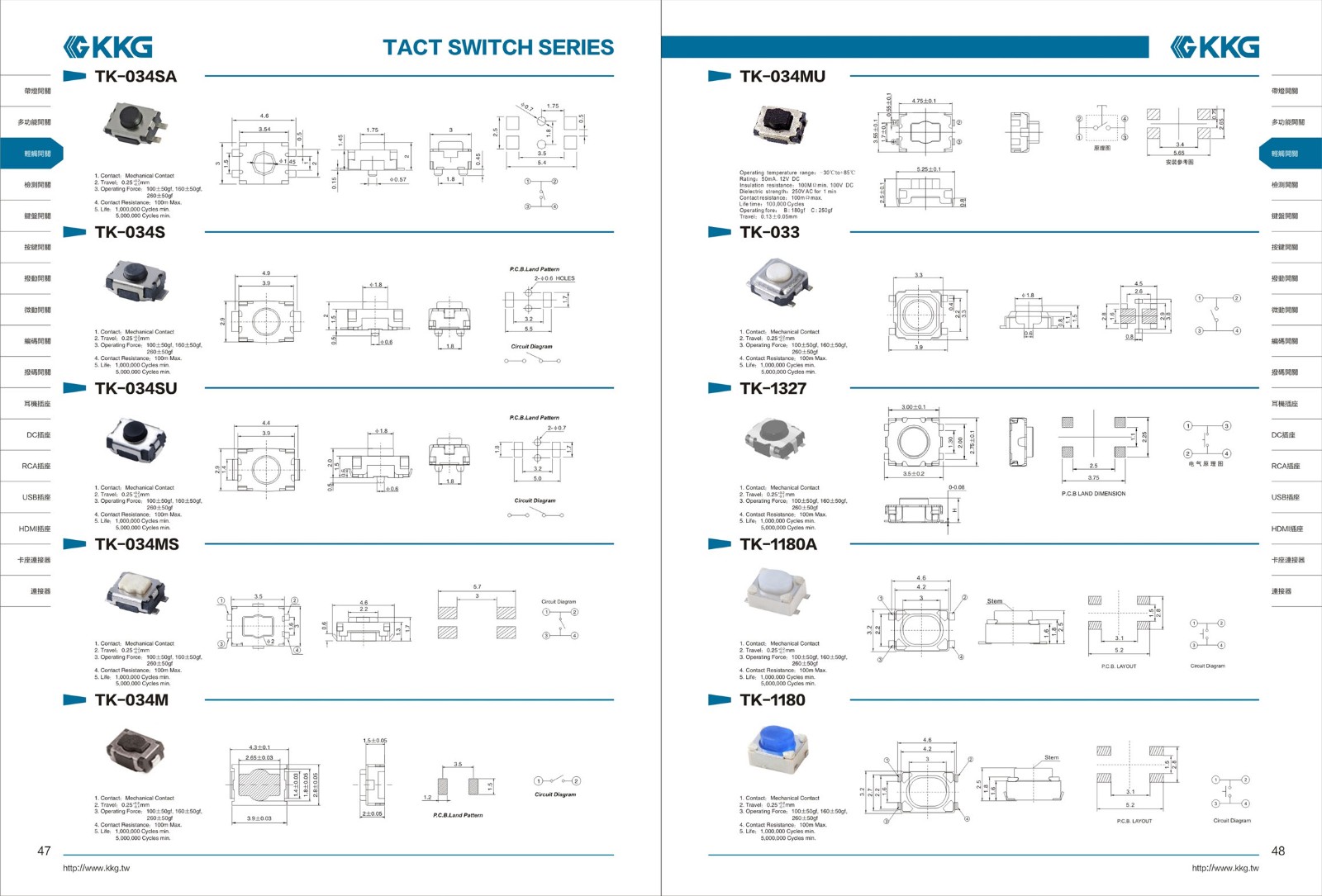
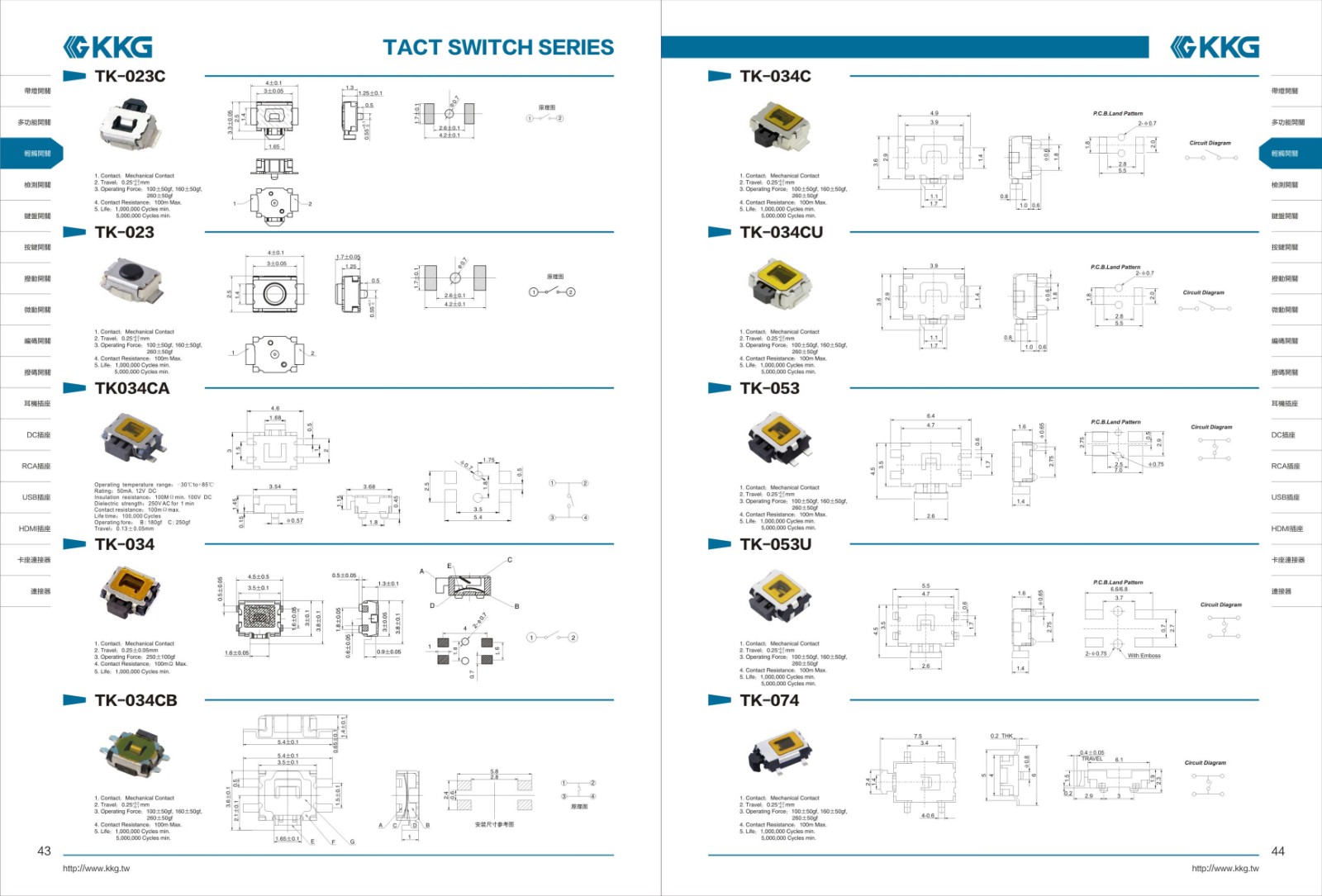
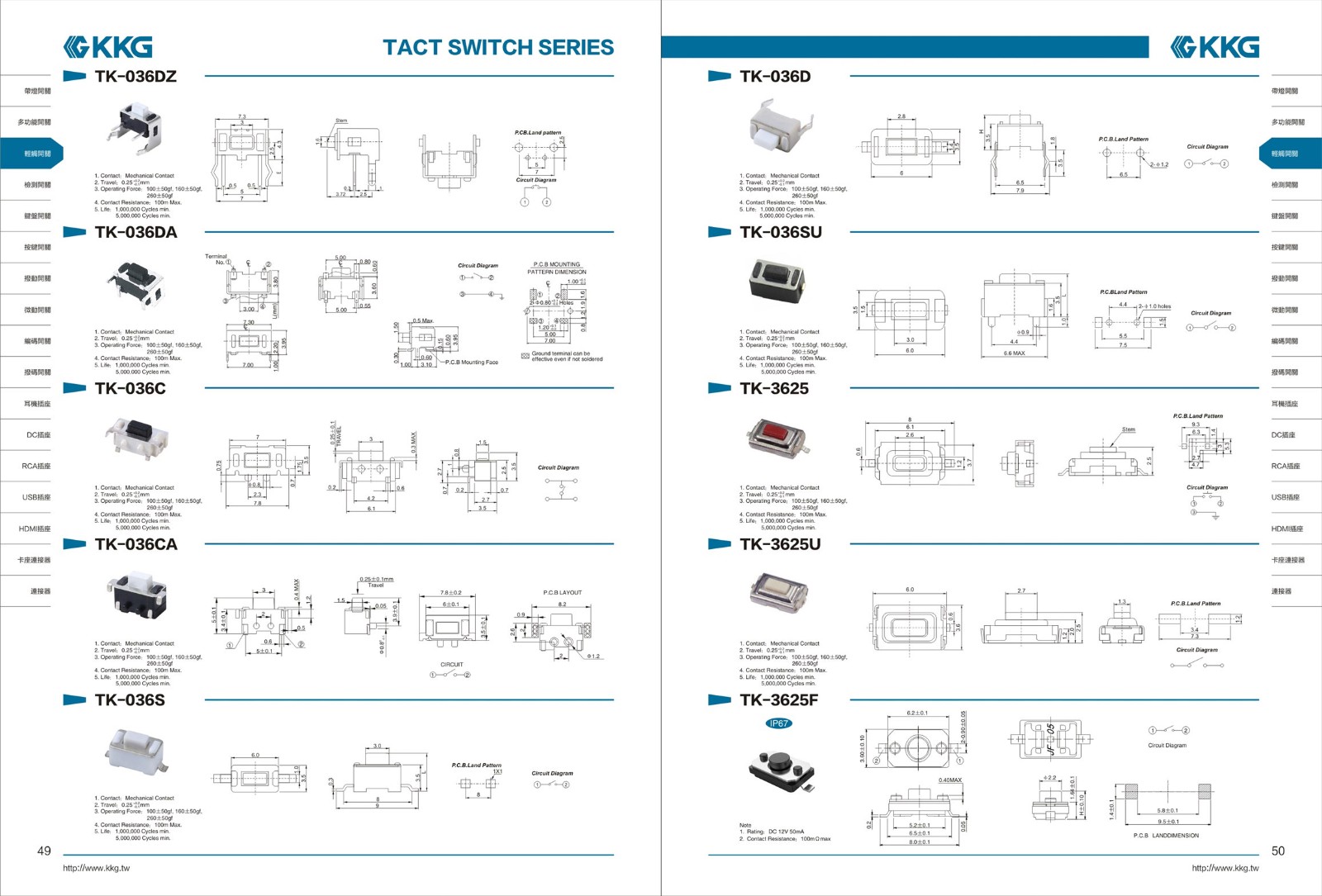
The common issues with Alps Ring Encoders mainly fall into three categories: abnormal signal output, mechanical operation failures, and environmental adaptability. Most of these issues can be resolved by checking wiring, mechanical structures, and the operating environment.
These issues directly affect the encoder's position or angle detection function and are the most common type of failure.
- First, check the power supply voltage to ensure it meets the rated value of the model (e.g., the PEC12 series usually requires DC 5V ± 10%). Insufficient voltage will cause the chip to fail to work.
- Inspect the wiring between the signal lines (A/B phases) and the MCU for loose soldering, wire breaks, or reverse connections. It is recommended to re-plug or re-solder the terminal blocks.
- If the wiring and power supply are normal, the internal circuit of the encoder may be damaged. Test with a new encoder of the same model.
- Check if the connection between the encoder and the rotating shaft is loose. Radial or axial runout of the shaft will cause induction deviation, so the matching structure between the shaft and the encoder needs to be reinforced.
- Confirm whether the operating environment has strong electromagnetic interference (e.g., near motors or frequency converters). Interference can be suppressed by adding shielded wires, keeping away from interference sources, or connecting capacitors (100pF-1nF) in parallel at both ends of the signal lines.
- For low-power devices, ensure the current meets the minimum rated value (e.g., some models require ≥ 50µA @ 3V). Insufficient current will reduce signal stability.
These issues are mainly related to the physical structure and service life of the encoder, and wear or jamming is likely to occur after long-term use.
- Check if dust or oil has entered the encoder. You can try blowing the shaft hole gently with compressed air or wiping the exterior with anhydrous alcohol (avoid liquid seeping into the interior).
- For models with detent function (e.g., the 24-position detent of the PEC12R), the internal detent spring may be worn beyond the mechanical life (usually ≥ 1,000,000 cycles), requiring replacement with a new encoder.
- Confirm whether excessive force was applied to press or rotate the shaft during installation, exceeding its mechanical strength (e.g., the diameter of most metal shafts is 2mm; avoid excessive radial force).
- Check if the size of the mounting hole matches the encoder diameter (e.g., the EC28 series corresponds to a 28mm mounting hole). An oversized hole can easily cause the shaft to wobble, and gaskets are needed to adjust the gap.
- The normal operating temperature of Alps encoders is mostly -30℃ ~ +85℃. If used in high-temperature environments (e.g., automobile engine compartments), high-temperature-resistant models should be selected (e.g., some automotive-grade series can withstand up to +105℃). Otherwise, internal material aging and signal failure may occur.
- Confirm whether the actual usage frequency exceeds the rated service life (e.g., consumer-grade models typically have a service life of 50,000-100,000 cycles, while industrial-grade models can reach 1,000,000 cycles). High-frequency usage scenarios require high-service-life models.
- Avoid use in humid (humidity > 85% RH) or corrosive environments. Encoders without waterproof treatment will suffer from poor contact due to internal oxidation, and additional waterproof enclosures are required.
Previous: EC43 Hollow Encoder
Next: Switch Encoder
Tel:
Add:
Rixing Industrial Zone,Tangxia Town, Dongguan City, Guangdong Province, China


Copyright © 2026 KKG ELECTRONICS ELECTRIC C0., LTD. All rights reserved
Privacy policy Cookie tracking