
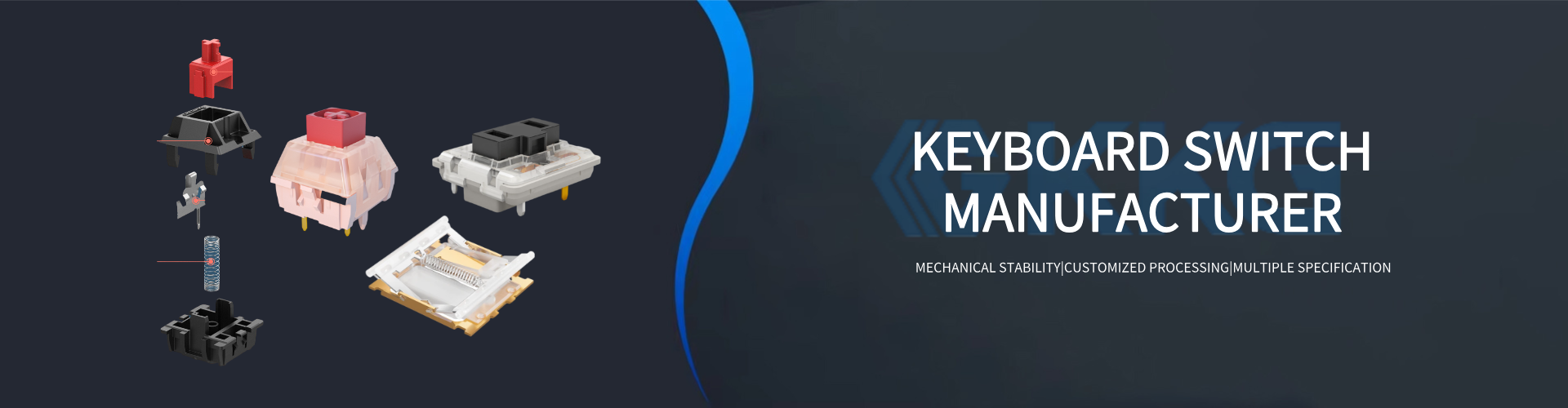
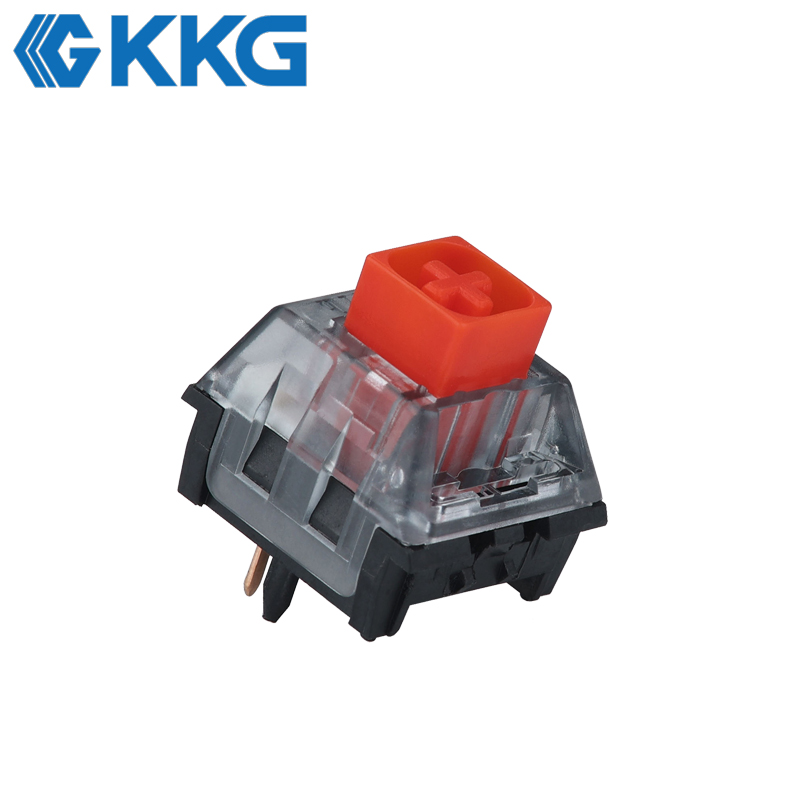
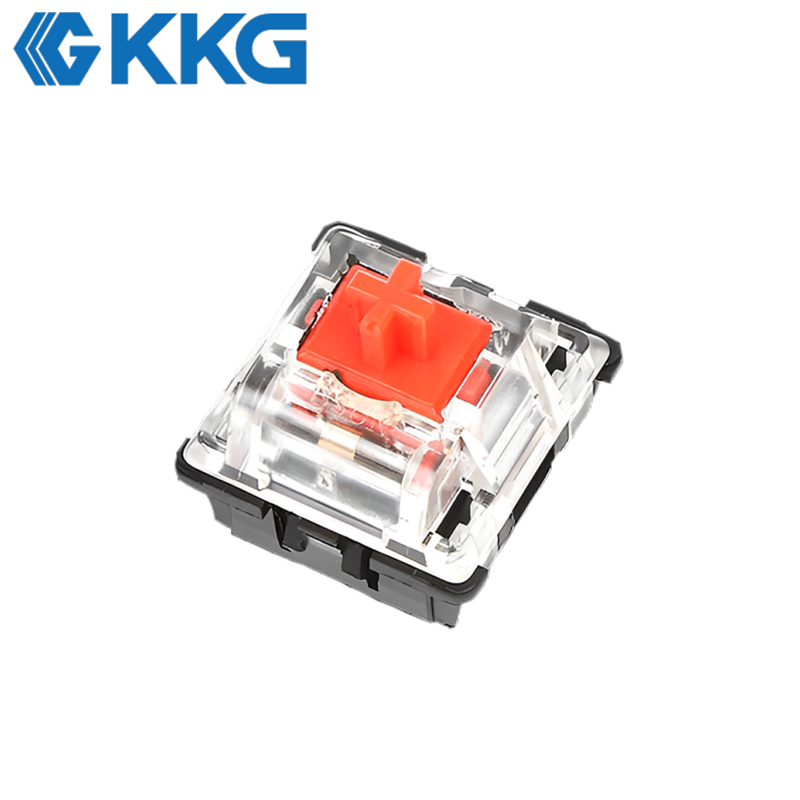
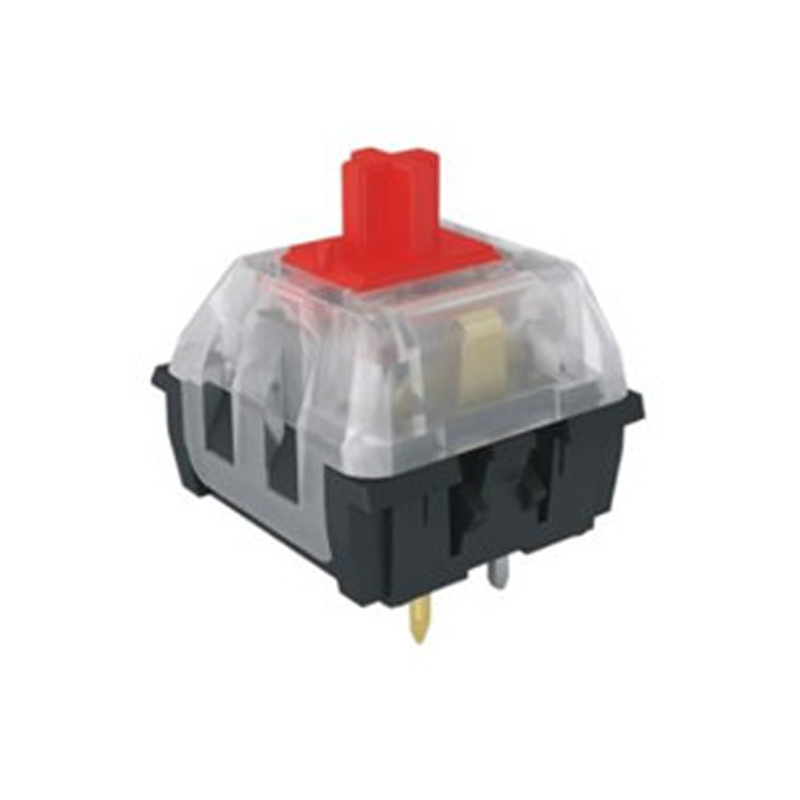
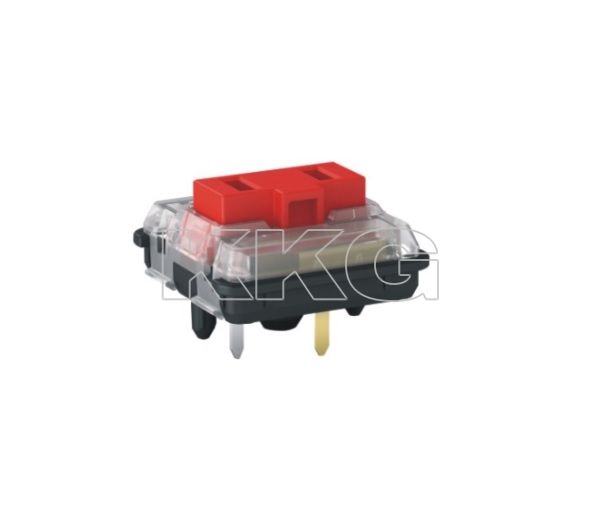
Mechanical keyboard switches are key actuation devices based on independent mechanical stems. Each key is equipped with a separate stem assembly (including components such as springs, contacts, and housings). Through physical contact or structural changes, the circuit is completed, thereby sending key press signals to the computer. The core principle lies in mechanical actuation.
Mechanical keyboard switches are primarily categorized into linear switches and tactile switches. Additionally, there are semi-tactile switches that combine features of both, and silent switches designed for quiet operation.
Linear switches deliver a smooth, unobstructed keystroke experience. From the moment the key is pressed to bottoming out, force is applied uniformly in a straight-up-and-down motion, without a distinct “clack” sound or tactile feedback.
Paragraph switches deliver a distinct “paragraphic feel” during keystrokes, where users perceive a slight increase in resistance at a specific point followed by a clear “clack” sound.