




In modern electronic devices and industrial equipment,switches are essential components that control electrical circuits and user operations.As products continue to become smaller,manufacturers increasingly rely on compact switching solutions to save space while maintaining reliable performance.
Two commonly discussed switch types are miniature switches and Micro Switches.Although their names sound similar,they are designed with different structures,operating principles,and application purposes.Understanding the differences between a miniature switch vs micro switch can help engineers,designers,and purchasing professionals choose the right component for their projects.
What Is a Miniature Switch?
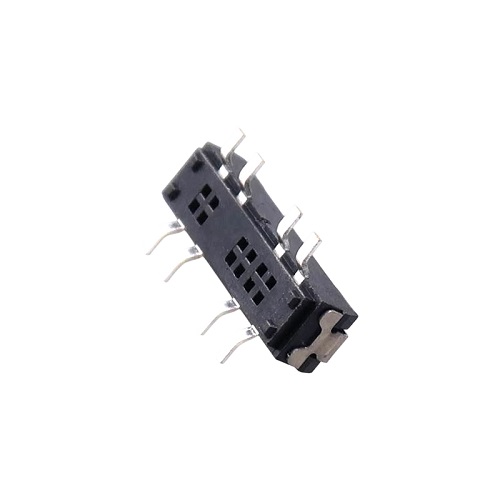
A miniature switch is a compact electrical switch designed to control current flow in space-limited applications.It provides a simple and effective way to turn circuits on or off through mechanical operation.
Due to its small size and flexible design,a miniature switch is widely used in consumer electronics,control panels,instruments,automotive systems,and industrial equipment.
Common types of miniature switches include:
Miniature toggle switch–Uses a lever mechanism for manual switching.
Mini Push Button Switch–Activated by pressing a button and often used for control panels.
Mini Rocker Switch–Provides easy operation through a rocking movement.
Slide Switch–Uses a sliding actuator to change circuit positions.
The main advantage of a mini switch is its compact design,allowing manufacturers to integrate reliable control functions into smaller products.
What Is a Micro Switch?
A micro switch is a type of snap-action switch that uses a spring mechanism to quickly change electrical contacts when the actuator is pressed or released.
Unlike a standard small switch,a micro switch is designed for precise operation and fast response.It typically requires only a small amount of physical movement to activate,making it suitable for applications where accuracy and reliability are important.
Common applications of micro switches include:
Home appliances
Industrial machines
Safety systems
Door and position detection devices
Automotive control systems
The quick switching action of a micro switch helps reduce electrical arcing and improves operational consistency.
Miniature Switch vs Micro Switch:Key Differences
Although both switches are compact,there are several important differences between a miniature switch and micro switch.
| Comparison | Miniature Switch | Micro Switch |
|---|---|---|
| Main Function | General circuit control | Precise snap-action switching |
| Operating Method | Toggle, push, rocker, or slide operation | Mechanical actuator with snap mechanism |
| Size | Compact design | Usually very small and precise |
| Response Speed | Normal switching speed | Faster switching action |
| Application Focus | User control and equipment operation | Detection, control, and automation |
| Typical Users | Product designers, electronics manufacturers | Industrial engineers and automation developers |
Different Applications of Miniature Switches and Micro Switches
Applications of Miniature Switches
A miniature switch is commonly used where users need direct control of electrical functions.
Typical applications include:
Consumer electronics
Audio equipment
Lighting controls
Small appliances
Control panels
Testing instruments
For example,a miniature toggle switch can provide a simple ON/OFF function in electronic devices while maintaining a compact appearance.
Applications of Micro Switches
Micro switches are often selected for applications requiring accurate position detection or automatic control.
Common uses include:
Industrial automation equipment
Printers and office machines
Elevator systems
Security devices
Automotive components
Their precise activation makes them suitable for situations where the system needs to detect movement,position,or mechanical changes.
How to Choose Between a Miniature Switch and Micro Switch?
Selecting the right switch depends on your product requirements and working environment.
Choose a Miniature Switch When:
You need manual user operation
Installation space is limited
A simple ON/OFF function is required
Different actuator styles are needed
Product appearance is important
Choose a Micro Switch When:
High switching accuracy is required
Fast response is important
Position detection is needed
The application involves automation systems
Long mechanical life is required
For manufacturers purchasing components in bulk,working with a professional miniature switch supplier or micro switch manufacturer can help ensure product compatibility,quality control,and customized solutions.
Advantages of Custom Miniature Switch Solutions
As electronic products become more specialized,many companies require switches designed for specific applications.A reliable custom miniature switch manufacturer can provide solutions including:
Customized actuator designs
Different mounting options
Specific voltage and current ratings
Special terminal configurations
OEM production services
Customized switches are especially valuable for industries such as industrial equipment,consumer electronics,and automotive products.
FAQ
Q1:Is a miniature switch the same as a micro switch?
No.While both are compact switches,they have different operating mechanisms and application purposes.Miniature switches focus on general control,while micro switches are designed for precise snap-action switching.
Q2:Which switch has a longer lifespan?
Both can provide long service life when properly selected.Micro switches often have excellent durability in repetitive mechanical operations,while miniature switches are reliable for manual control applications.
Q3:Can miniature switches replace micro switches?
Not always.The choice depends on the application requirements,including switching speed,accuracy,operating force,and installation design.
Q4:Where can I buy miniature switches in bulk?
Businesses can purchase from professional miniature switch manufacturers or suppliers that provide OEM,customization,and wholesale solutions.