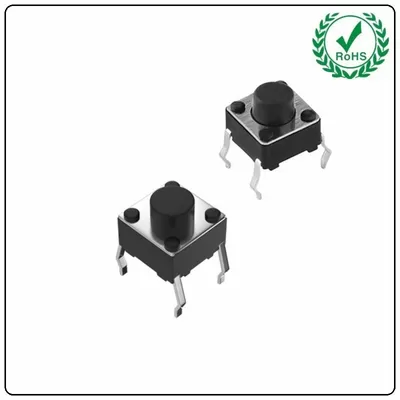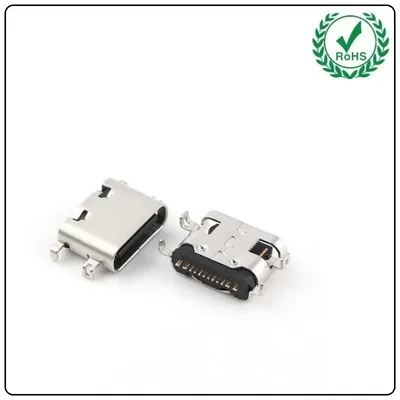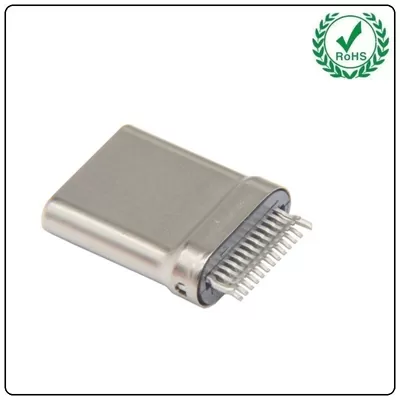

The application of 6×6 tactile switches in multi-head massagers primarily manifests as their role as core components in control circuitry. Through light touch operation, they enable function switching, mode adjustment, and power control for the massager. Their compact design, high reliability, and diverse specifications meet the massager's requirements for operational convenience and space utilization.
I. Core Functionality Implementation
Mode Switching: Multi-head massagers typically feature multiple massage modes (e.g., kneading, tapping, vibration). The 6×6 tact switch enables rapid mode switching via light touch operation, meeting diverse user needs. Its precise actuation force tolerance ensures stable mode switching with each press, preventing accidental operation.
Intensity Adjustment: Some massagers support adjustable intensity. The 6×6 tact switch, integrated with circuit design, enables incremental intensity increase/decrease through multiple taps or long presses, enhancing user experience. Its low contact resistance (typically ≤100mΩ) guarantees stable signal transmission, ensuring precise intensity control.
Power Control: Functioning as a power switch, the 6×6 tact switch activates or deactivates the massager with a single touch. Its compact design (6×6 mm external dimensions) saves PCB space, facilitating optimized internal layout for the massager.
II. Technical Advantages
High Reliability: With a rated operating voltage of 12VDC, current of 50mA, insulation resistance ≥100MΩ, and withstand voltage of AC250V (50/60Hz for 1 minute), these specifications ensure long-term stability in massagers, minimizing failures from voltage fluctuations or frequent operation.
Long Lifespan: With a switching life of ≥50,000 cycles, it meets multi-year usage demands even with daily intensive use, lowering maintenance costs for massagers.
Diverse Specifications: 6×6 tactile switches offer multiple height options (e.g., surface-mount heights 2.5–7.0 mm, through-hole heights 4.5–19 mm) to accommodate varied internal structural designs of massagers. For instance, ultra-thin massagers can utilize low-profile surface-mount switches, while models with ample space can opt for through-hole switches for enhanced soldering integrity.
III. Application Scenario Example
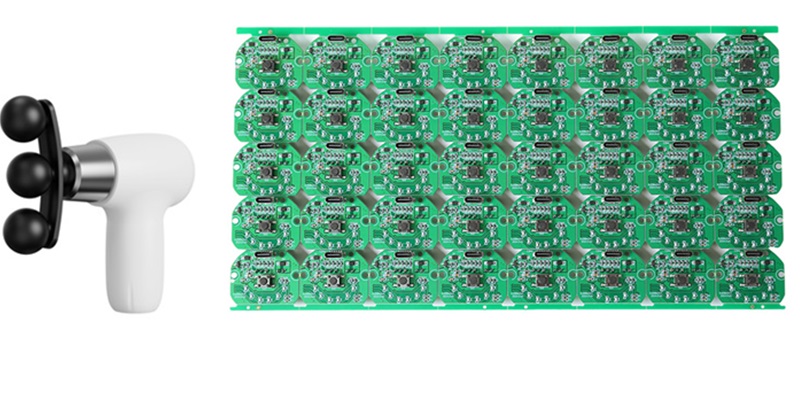
Consider a head massager featuring a multi-contact massage head design that forms a dot matrix pattern on the scalp. The 6×6 tact switch controls the vibration frequency and mode of the massage heads. Users can switch between modes like “Vitality Mode” and “Sleep Mode” via the tactile switches while adjusting through 10 massage intensity levels. The compact switch design allows concealment within the massager's inner casing, ensuring both aesthetic appeal and user-friendly operation. Additionally, its high insulation resistance and voltage withstand capability guarantee safe operation in humid environments such as bathrooms.