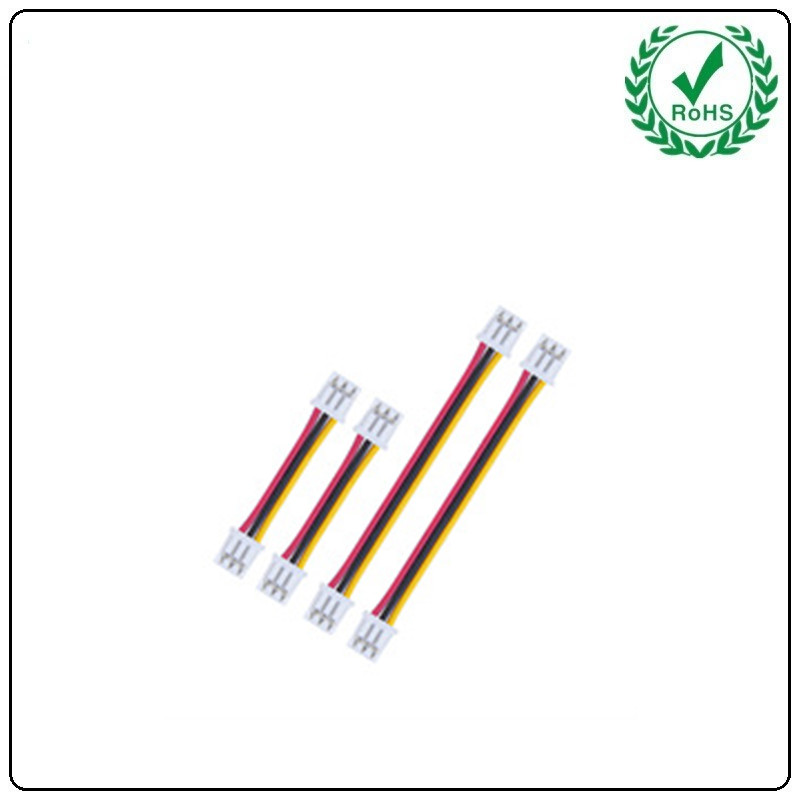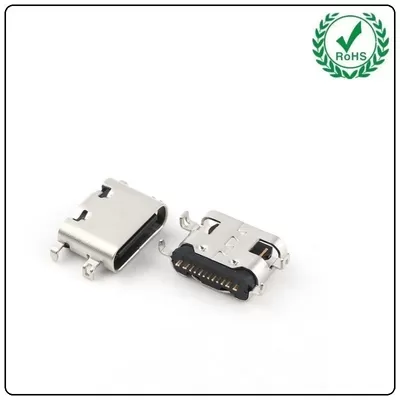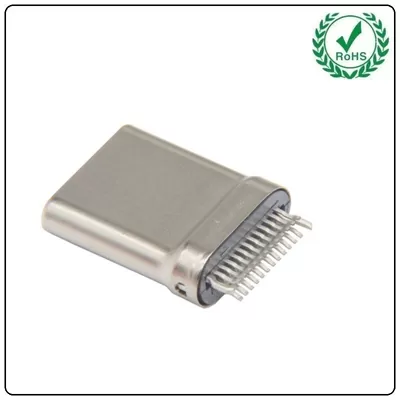

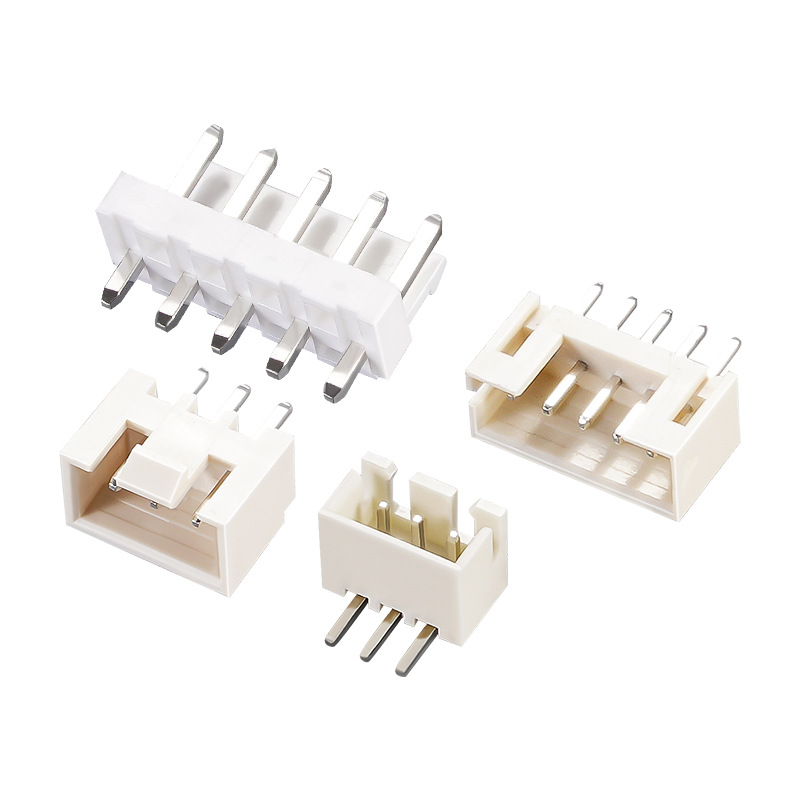
Wafer pin sockets typically consist of core components such as the housing, pins, and positioning/fixing structures. The housing is often made from high-temperature-resistant, highly insulating materials like LCP or PPS, while the pins primarily use highly conductive copper alloys, serving as the key to achieving electrical connectivity. They are frequently paired with lead wires (or corresponding wafer plugs, FPC/PCB boards), enabling precise electrical contact between pins and mating components to facilitate signal transmission and power supply among electronic parts like chips, PCBs, and flexible circuit boards.
Wafer connectors rely on structural features like mounting holes, guide slots, and positioning slots to ensure precise alignment during connection. This guarantees mechanical stability and consistent electrical transmission throughout the assembly. Pin sockets are widely adapted for compact installation scenarios in miniature electronic devices such as mobile phones, sensors, and wearable devices.
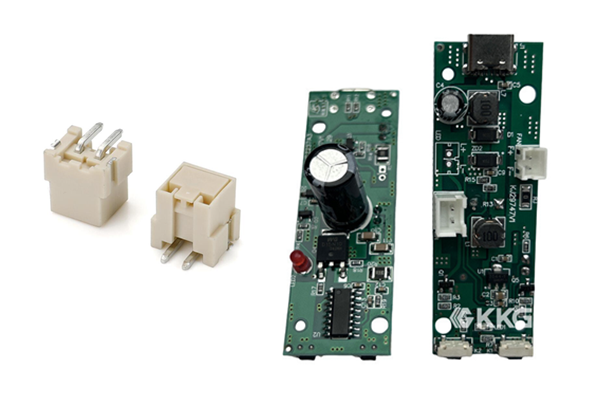
Humidifiers and aromatherapy vaporizers require multiple wafer pin sockets in various specifications. The core function of wafer pin sockets is to serve as critical components for circuit connection and signal transmission, ensuring stable operation and precise control of the humidifier.
The Basic Function of the Needle Holder in a Humidifier
1.Circuit Connections: The humidifier's internal components include a power supply module, control circuitry, sensors, and other elements. pin headers establish electrical connections between these modules through precision pin structures (e.g., 1x7P, 1.5mm pitch horizontal placement design). For instance, temperature and humidity sensors transmit environmental data to the main control board via pin headers, which then adjust mist output based on preset parameters. Signal Transmission: In smart humidifiers, pin headers may handle more complex signal transmission tasks, such as enabling remote control via IoT modules. In these scenarios, pin headers must support high-frequency signals (e.g., RF detection arms) or low-power communication protocols (e.g., Bluetooth, Wi-Fi) to ensure stable connectivity between the device and mobile apps or cloud servers.
2.Signal Transmission: In smart humidifiers, pin headers may handle more complex signal transmission tasks, such as enabling remote control via IoT modules. In these scenarios, pin headers must support high-frequency signals (e.g., RF detection arms) or low-power communication protocols (e.g., Bluetooth, Wi-Fi) to ensure stable connectivity between the device and mobile apps or cloud servers.
The Indirect Role of Pin Sockets in Humidifiers
1. Enhancing Equipment Stability: Humidifiers operate in environments involving moisture and water mist. Pin sockets featuring anti-static designs or corrosion-resistant materials (such as stainless steel contacts) reduce circuit failure risks caused by environmental factors, thereby extending equipment lifespan.
2. Supporting Precision Control: Some high-end humidifiers feature fine-tuning capabilities. The needle holder enables precise positioning of sensors or actuators, thereby optimizing humidification efficiency or reducing energy consumption.
Although the needle holder is crucial for the humidifier's circuit connections and signal transmission, it is not a core component and does not directly participate in the atomization process. Even with an excellent needle holder, the humidifier will still fail to function properly if the atomization components are flawed—such as a clogged nozzle or damaged vibrating diaphragm.