




In modern industrial control systems, precise and reliable input components play an important role in improving equipment performance and user experience. A Joystick Potentiometer is widely used as a control interface that converts mechanical movement into electrical signals, allowing operators to control direction, speed, and position accurately.
However, choosing the right joystick potentiometer is not always simple. Different applications require different specifications, including axis configuration, resistance value, accuracy, durability, and environmental adaptability. Selecting an unsuitable model may affect control sensitivity, system stability, and overall equipment performance.
This guide explains the key factors to consider when selecting a joystick potentiometer, helping engineers, designers, and purchasers choose the right solution for industrial equipment, robotics, medical devices, gaming systems, and other applications.
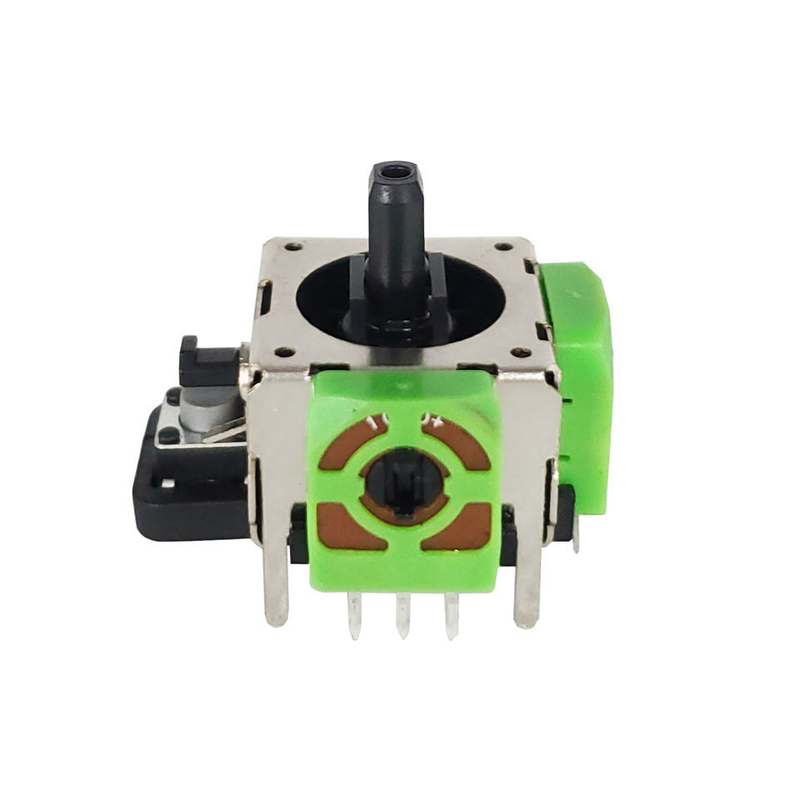
What Is a Joystick Potentiometer?
A joystick potentiometer is an electromechanical control component that converts joystick movement into variable electrical signals. When the joystick handle moves, the internal resistance changes accordingly, and the control system interprets these changes as movement commands.
Compared with traditional Rotary Potentiometers, joystick potentiometers provide multi-directional control, making them suitable for applications that require intuitive and flexible operation.
A typical joystick potentiometer consists of several key parts:
Joystick shaft: Receives mechanical movement from the operator.
Resistive element: Converts physical movement into electrical resistance changes.
Terminals or CONNECTORs: Transmit output signals to the control system.
Mechanical structure: Ensures smooth operation and long service life.
By providing accurate position feedback, joystick potentiometers help improve control efficiency and operational precision in various electronic and mechanical systems.
How Does a Joystick Potentiometer Work?
The working principle of a joystick potentiometer is based on variable resistance technology.
When the joystick is moved, the internal wiper slides across the resistive track, changing the output resistance. The connected controller detects this electrical variation and converts it into a control signal.
For example:
Moving the joystick forward may increase or decrease the output voltage.
Moving it left or right controls another axis.
The system processes these signals to adjust movement, speed, or position.
This simple but effective mechanism makes joystick potentiometers a popular choice for equipment requiring real-time human-machine interaction.
Key Factors to Consider When Choosing a Joystick Potentiometer
Selecting the correct joystick potentiometer requires evaluating several technical factors based on the application requirements.
1. Number of Axes
The first consideration is the number of control directions required.
Single Axis Joystick Potentiometer
Single-axis models detect movement in one direction and are suitable for simple control applications.
Common uses include:
Basic machine controls
Industrial SWITCHes
Simple adjustment systems
Dual Axis Joystick Potentiometer
Dual-axis models detect movement along both X and Y directions, providing more flexible control.
They are commonly used in:
Robotics
Remote control systems
Industrial machinery
Camera positioning equipment
For applications requiring precise multi-directional control, a dual-axis joystick potentiometer is usually a better choice.
2. Resistance Value
Resistance value is another important factor that affects compatibility with the control system.
Common resistance options include:
1KΩ
5KΩ
10KΩ
The correct resistance value ensures stable signal output and proper communication between the joystick and the controller.
Before selecting a model, engineers should confirm the electrical requirements of the application to avoid signal errors or performance issues.
3. Accuracy and Sensitivity
For precision control applications, accuracy and sensitivity are critical.
Important specifications include:
Linearity
Resolution
Repeatability
Signal stability
For example, robotic systems and medical equipment often require high-precision joystick potentiometers because small control errors can affect equipment operation.
A high-quality joystick potentiometer provides smooth movement and accurate feedback, improving overall system performance.
4. Mechanical Life and Durability
The operating life of a joystick potentiometer directly affects equipment reliability.
When selecting a model, consider:
Operating cycles
Contact durability
Mechanical strength
Long-term stability
For industrial environments where equipment operates continuously, a durable joystick potentiometer can reduce maintenance requirements and improve product lifespan.
5. Operating Environment
Different applications require different levels of environmental protection.
Important factors include:
Temperature Resistance
Equipment used in extreme environments may require components that can operate under high or low temperatures.
Dust and Moisture Protection
Outdoor machinery and industrial equipment may require enhanced protection against dust and humidity.
Mechanical Protection
Heavy-duty applications may need stronger structures to withstand vibration or frequent operation.
Choosing a joystick potentiometer designed for the actual working environment ensures better reliability.
Applications of Joystick Potentiometers
Due to their flexibility and reliable control performance, joystick potentiometers are widely used across multiple industries.
Industrial Control Systems
In industrial automation, joystick potentiometers are often used for machine operation and manual control interfaces.
Typical applications include:
CNC equipment
Automation machinery
Control panels
Material handling equipment
They provide operators with intuitive control and allow precise adjustment of machine movement.
Robotics and Remote Control Systems
Robotic equipment requires accurate and responsive control signals.
Joystick potentiometers are commonly used in:
Robot arm controllers
Remote operation systems
Mobile robots
Industrial robots
Their smooth operation and accurate feedback help improve robotic movement control.
Medical Equipment
Medical devices often require reliable and easy-to-use control interfaces.
Applications include:
Patient positioning systems
Mobility equipment
Medical control panels
In these applications, stability, precision, and user comfort are especially important.
Gaming and Simulation Equipment
Joystick potentiometers are also widely used in entertainment and simulation systems.
Applications include:
Flight simulators
Racing simulators
Arcade controllers
Gaming devices
They provide realistic movement feedback and improve user interaction.
Joystick Potentiometer vs Hall Effect Joystick
When selecting a joystick control solution, many users compare traditional potentiometer technology with Hall Effect joystick technology.
| Feature | Joystick Potentiometer | Hall Effect Joystick |
|---|---|---|
| Working Principle | Variable resistance | Magnetic sensing |
| Cost | More affordable | Higher cost |
| Accuracy | Good | Excellent |
| Service Life | Good | Very high |
| Maintenance | Low | Very low |
| Applications | General control systems | High-end control applications |
A joystick potentiometer remains a practical choice for many industrial and commercial applications because it offers reliable performance with competitive cost.
Hall Effect solutions may be preferred when extremely high durability and precision are required.
How to Choose a Reliable Joystick Potentiometer Supplier?
For equipment manufacturers, choosing the right supplier is as important as choosing the right product.
A reliable joystick potentiometer manufacturer should provide:
Customization Capability
Different applications may require customized solutions, including:
Shaft design
Resistance value
Connector type
Mounting structure
Output configuration
Customization helps ensure the component fits perfectly into the final equipment design.
Quality Control
A professional supplier should have strict quality management processes, including:
Material inspection
Performance testing
Reliability testing
Production consistency control
Stable quality is essential for applications where equipment reliability is critical.
OEM and ODM Support
Many equipment manufacturers require customized components rather than standard products.
An experienced potentiometer supplier with OEM/ODM capabilities can provide:
Product modification
Engineering support
Customized production
Flexible manufacturing solutions
This helps customers reduce development time and improve product competitiveness.
How to Select the Right Joystick Potentiometer for Your Project?
Before purchasing, consider the following questions:
What type of movement control is required?
Is a single-axis or dual-axis model more suitable?
What resistance value does the control system require?
How accurate does the feedback need to be?
What environmental conditions will the product face?
Does the supplier provide customization services?
By evaluating these factors, buyers can select a joystick potentiometer that delivers reliable performance and long-term value.
FAQ
Q1: What is a joystick potentiometer used for?
A joystick potentiometer converts joystick movement into electrical signals and is commonly used in industrial controls, robotics, medical equipment, gaming systems, and simulation devices.
Q2: How do I choose the right joystick potentiometer?
The selection depends on factors such as axis type, resistance value, accuracy, operating life, installation method, and application environment.
Q3: What is the difference between a joystick potentiometer and a normal potentiometer?
A normal potentiometer usually provides rotary adjustment, while a joystick potentiometer detects multi-directional movement for more complex control applications.
Q4: Are joystick potentiometers suitable for industrial applications?
Yes. Industrial joystick potentiometers are widely used in automation equipment, machinery controls, and remote operation systems due to their reliable performance and flexible design.
Q5: Can joystick potentiometers be customized?
Yes. Many manufacturers provide customization options including resistance values, mechanical structures, connectors, and installation designs to meet specific equipment requirements.
Conclusion
Choosing the right joystick potentiometer requires careful consideration of application requirements, electrical specifications, mechanical design, and operating conditions. From industrial automation and robotics to medical equipment and simulation systems, the right joystick control solution can significantly improve equipment performance and user experience.
Working with an experienced joystick potentiometer manufacturer or potentiometer supplier ensures consistent quality, customization flexibility, and reliable support for long-term projects.
Whether you need a standard model or a customized solution, selecting the right joystick potentiometer is an important step toward building efficient and reliable control systems.