




In modern industrial automation, precise control and efficient operation are essential for improving productivity and reducing operational errors. As automation systems become more advanced, manufacturers require reliable input devices that can provide accurate movement control and real-time feedback. A Joystick Potentiometer is one of the commonly used control components that helps operators interact with machines through smooth and intuitive motion control.
Unlike traditional SWITCHes or rotary controls, Joystick Potentiometers allow multi-directional operation and convert physical movement into electrical signals. This makes them suitable for industrial applications that require precise positioning, speed adjustment, and manual control.
From robotic systems and CNC machines to material handling equipment and industrial vehicles, industrial joystick potentiometers provide a practical solution for human-machine interaction. This article explores their working principles, key features, and major applications in automation systems.
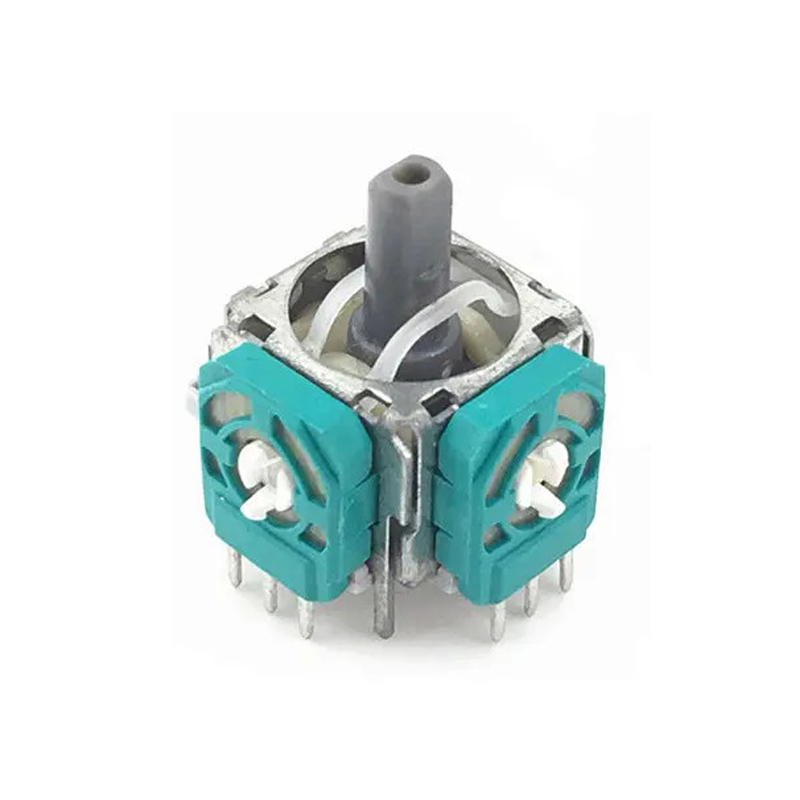
What Is a Joystick Potentiometer?
A joystick potentiometer is an electromechanical control component that converts the movement of a joystick handle into variable electrical signals. When the operator moves the joystick, the internal resistance changes, and the connected control system interprets these changes as commands.
The output signals can be used to control:
Direction of movement
Speed adjustment
Position control
Machine operation functions
A typical joystick potentiometer consists of several important components:
Joystick handle: Provides the user interface for manual operation.
Resistive element: Detects movement changes and generates variable resistance.
Mechanical structure: Ensures smooth operation and durability.
Electrical terminals: Transfer signals to the control system.
Due to its simple structure, reliable performance, and flexible design options, the joystick potentiometer has become an important input component in industrial automation.
Why Are Joystick Potentiometers Important in Automation Systems?
Automation equipment often requires accurate and responsive control. Although many systems operate automatically, manual input is still necessary during setup, adjustment, maintenance, and remote operation.
Joystick potentiometers provide several advantages:
1. Precise Motion Control
In industrial environments, operators need accurate control over machine movements. A joystick potentiometer allows smooth adjustment instead of limited on/off operation.
For example, in robotic arms or lifting equipment, small joystick movements can create precise position adjustments, improving operational efficiency.
2. Intuitive Human-Machine Interaction
Compared with complex control panels, joystick controls are easier for operators to understand and use.
The natural movement of a joystick provides:
Faster operation
Better user experience
Reduced training requirements
This is especially valuable in applications where quick response is important.
3. Reliable Performance in Industrial Environments
Industrial automation systems often operate under demanding conditions, including vibration, dust, and continuous usage.
A high-quality industrial joystick potentiometer is designed to provide:
Long operating life
Stable signal output
Consistent performance
Mechanical durability
These characteristics make joystick potentiometers suitable for long-term industrial applications.
Industrial Applications of Joystick Potentiometers
1. CNC Machines and Manufacturing Equipment
Computer Numerical Control (CNC) machines require precise movement control during operation, setup, and maintenance.
Joystick potentiometers are commonly used for:
Manual axis adjustment
Machine positioning
Tool alignment
Operator control panels
During machine setup, operators can use joystick controls to move components accurately before automatic processing begins.
The smooth and responsive operation of joystick potentiometers helps improve workflow efficiency and reduce positioning errors.
2. Robotics and Automated Systems
Robotics is one of the fastest-growing areas where joystick potentiometers are widely applied.
In robotic systems, they are used for:
Robot arm movement control
Remote operation
Programming adjustments
Testing procedures
For example, engineers can manually control robotic arms through joystick interfaces during development and maintenance.
The precise feedback provided by joystick potentiometers helps improve robot movement accuracy and operational flexibility.
3. Material Handling Equipment
Industrial transportation and lifting equipment require reliable control solutions.
Joystick potentiometers are frequently used in:
Forklifts
Cranes
Lifting platforms
Automated guided vehicles (AGVs)
Operators can easily adjust movement speed and direction through joystick controls.
Compared with traditional mechanical switches, joystick potentiometers provide smoother control, improving both safety and efficiency.
4. Industrial Vehicles
Many industrial vehicles require precise control in limited spaces.
Applications include:
Construction machinery
Agricultural equipment
Mining vehicles
Electric utility vehicles
In these environments, joystick potentiometers help operators control:
Driving direction
Hydraulic functions
Equipment positioning
Their compact design and flexible installation options make them suitable for various vehicle control systems.
5. Automated Inspection and Testing Equipment
Automation systems used for inspection and testing often require precise manual adjustments.
Joystick potentiometers can be integrated into:
Testing platforms
Vision inspection systems
Laboratory automation equipment
Operators can quickly adjust equipment position and movement, improving testing efficiency and accuracy.
Key Factors for Selecting Joystick Potentiometers for Automation
Choosing the right joystick potentiometer is essential for ensuring reliable system performance.
1. Axis Configuration
Different automation systems require different movement directions.
Common options include:
Single-axis joystick potentiometers
Dual-axis joystick potentiometers
Single-axis models are suitable for simple movement control, while dual-axis models provide more flexible operation for complex systems.
2. Electrical Specifications
The electrical characteristics must match the control system.
Important parameters include:
Resistance value
Output signal type
Operating voltage
Linearity
Proper specification matching ensures stable communication between the joystick and the controller.
3. Mechanical Durability
Industrial equipment often operates for extended periods.
Important considerations include:
Operating cycles
Mechanical strength
Wear resistance
Environmental protection
A durable joystick potentiometer reduces maintenance costs and improves equipment reliability.
4. Customization Requirements
Different automation systems may require customized designs.
A professional joystick potentiometer manufacturer can provide solutions such as:
Customized shaft designs
Special mounting structures
Different resistance values
CONNECTOR modifications
Customized components allow manufacturers to achieve better integration with their equipment.
Joystick Potentiometers vs Other Control Solutions
Compared with buttons or rotary switches, joystick potentiometers offer more flexible control.
| Control Method | Advantages | Limitations |
|---|---|---|
| Joystick Potentiometer | Multi-direction control, smooth operation, precise adjustment | Requires proper calibration |
| Push Button | Simple and low cost | Limited control functions |
| Rotary Switch | Reliable selection control | Not suitable for continuous movement |
| Touch Screen | Flexible interface | Less suitable for harsh environments |
For industrial automation applications requiring physical feedback and precise movement control, joystick potentiometers remain a practical solution.
How to Choose a Reliable Joystick Potentiometer Supplier?
For automation equipment manufacturers, selecting the right supplier is an important part of product development.
A reliable supplier should provide:
Quality Manufacturing
Consistent production processes and strict testing ensure stable product performance.
Engineering Support
Professional suppliers can assist with:
Product selection
Technical specifications
Application requirements
OEM and Custom Solutions
Many industrial customers require customized components for specific machines.
Working with an experienced potentiometer supplier allows businesses to develop customized control solutions that meet their equipment requirements.
FAQ About Joystick Potentiometers in Automation Systems
Q1: Why are joystick potentiometers used in industrial automation?
Joystick potentiometers provide smooth and precise manual control, allowing operators to adjust machine direction, speed, and position accurately.
Q2: What industries use industrial joystick potentiometers?
They are widely used in CNC machines, robotics, material handling equipment, industrial vehicles, testing systems, and automation equipment.
Q3: What is the difference between a joystick potentiometer and a normal potentiometer?
A normal potentiometer usually provides rotary adjustment, while a joystick potentiometer detects multi-directional movement for advanced control applications.
Q4: Can joystick potentiometers be customized for automation equipment?
Yes. Manufacturers can customize resistance values, mechanical structures, connectors, and installation methods according to specific application requirements.
Conclusion
Joystick potentiometers play an important role in modern automation systems by providing accurate, reliable, and intuitive control solutions. From robotic systems and CNC machines to industrial vehicles and testing equipment, these components help improve operational efficiency and user interaction.
When selecting a joystick potentiometer for automation applications, manufacturers should consider factors such as axis configuration, electrical specifications, durability, and customization capability.
By working with an experienced joystick potentiometer manufacturer or potentiometer supplier, businesses can achieve reliable control solutions that support the long-term performance of their automation systems.