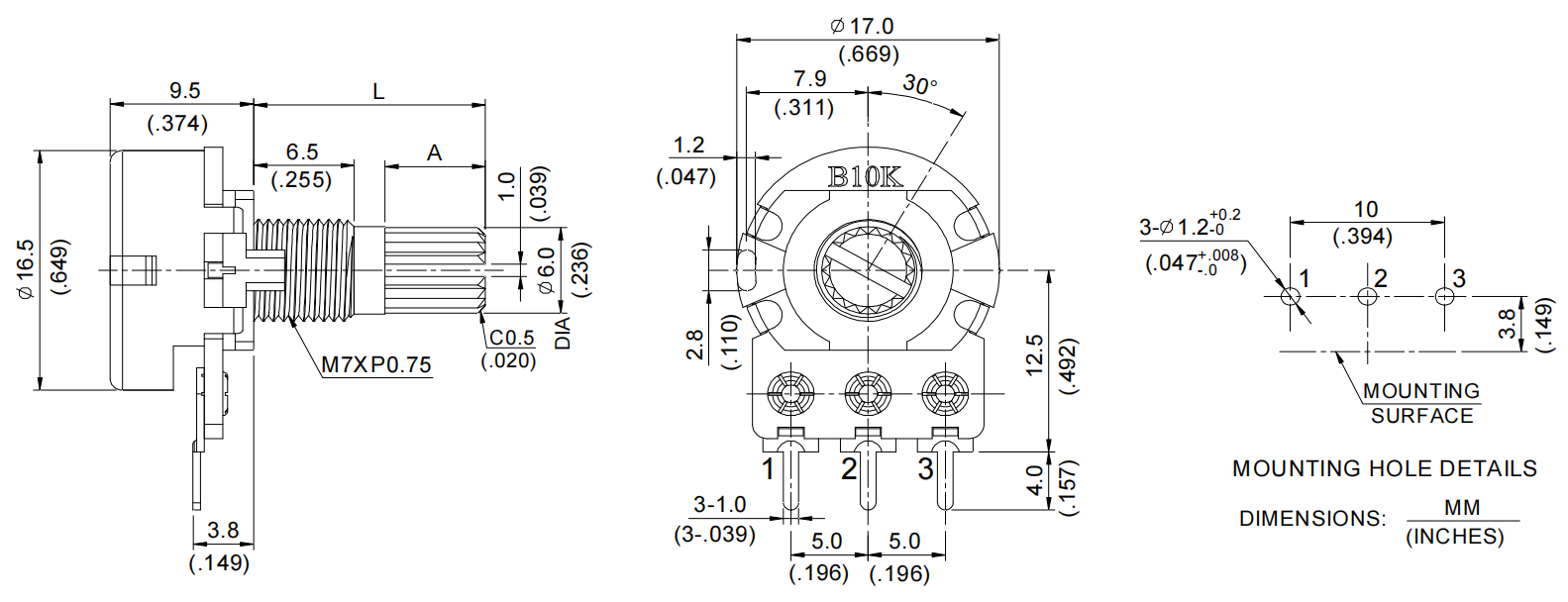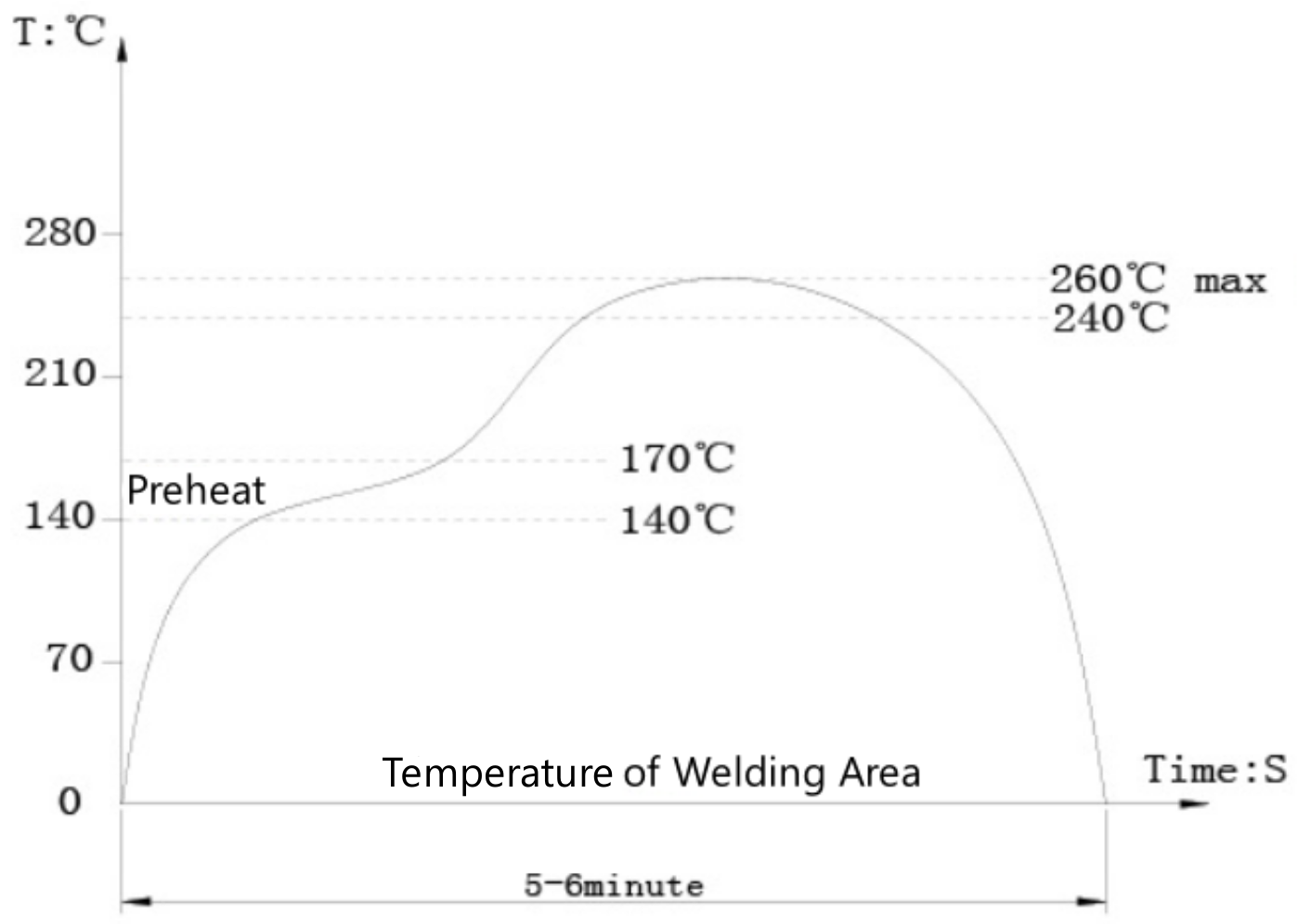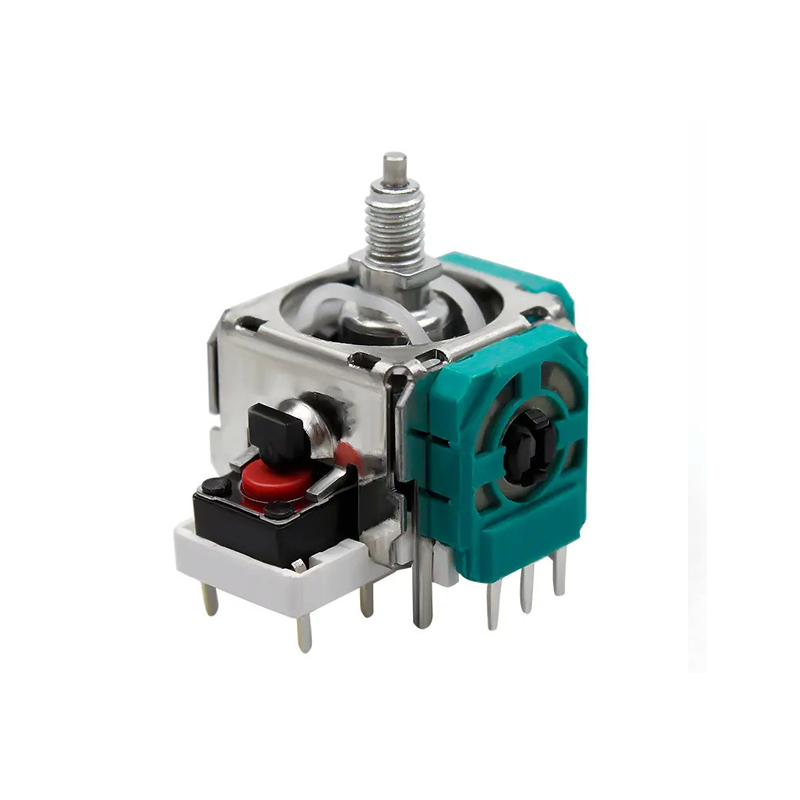
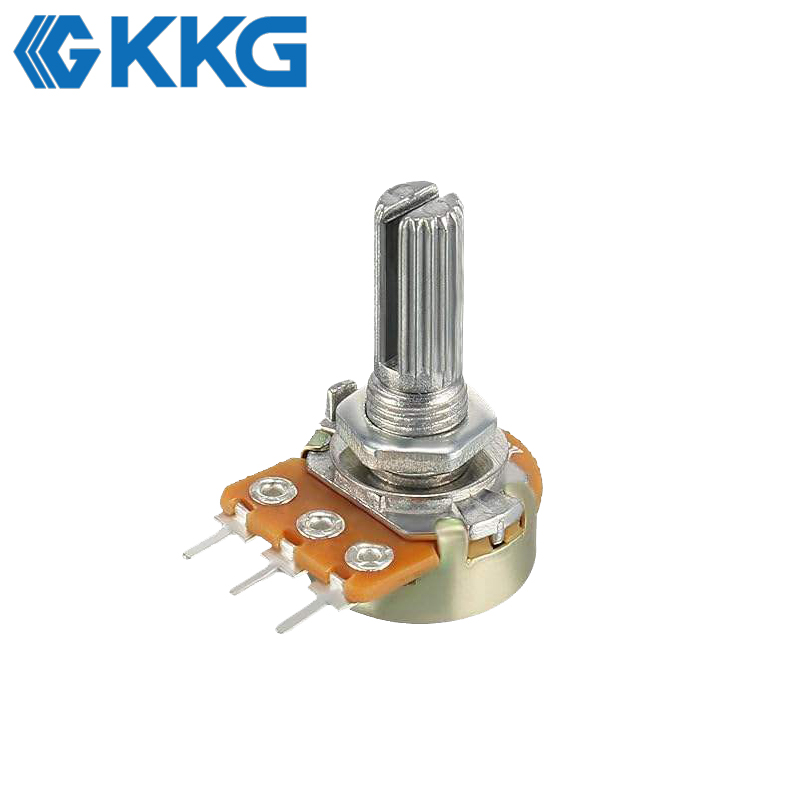
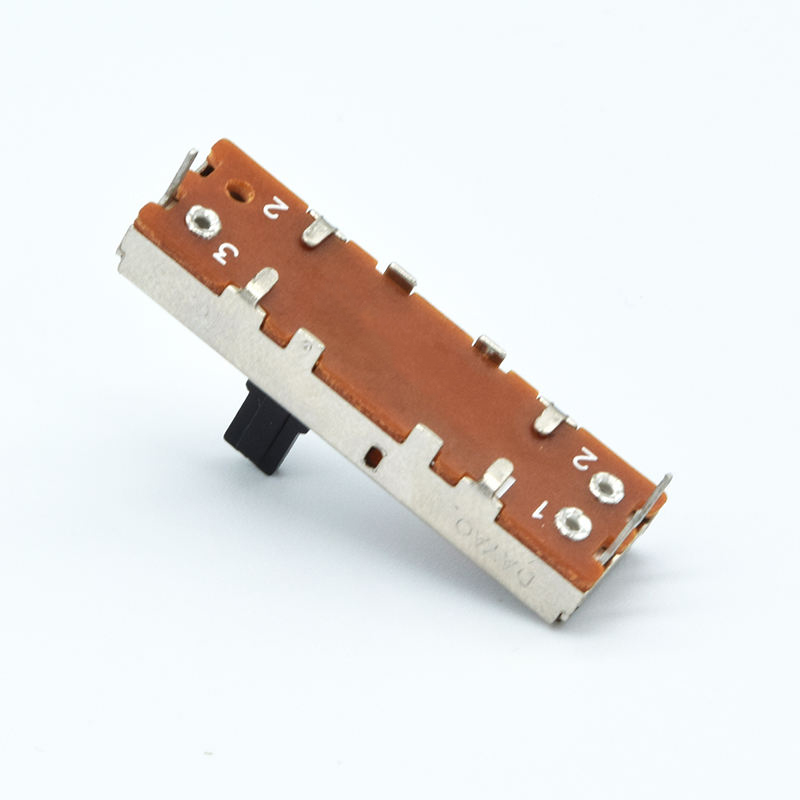
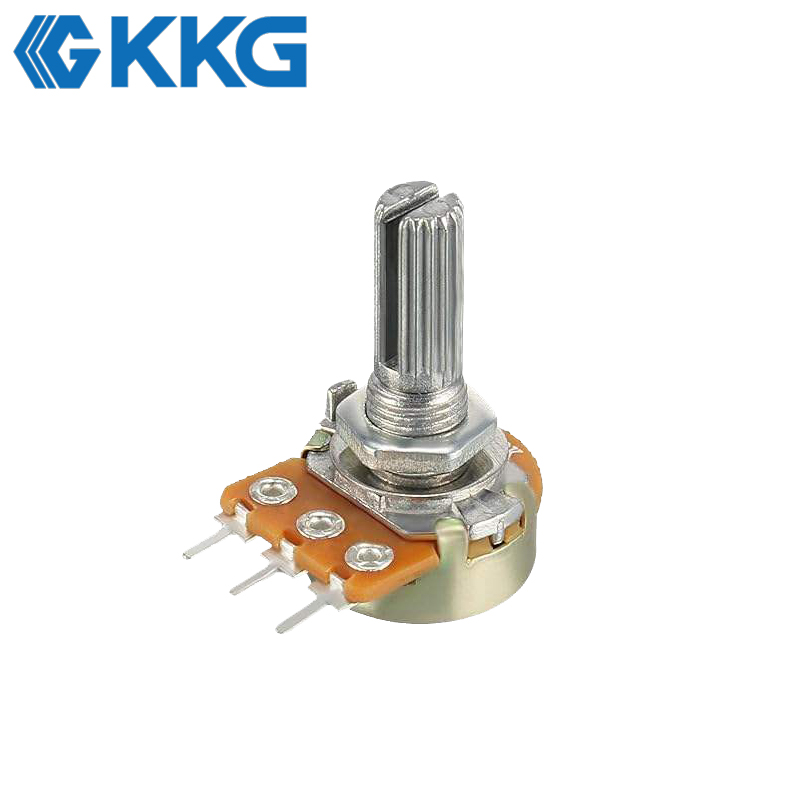
The Rotary Potentiometer is an adjustable resistor designed for precise control of voltage, current, and electrical signals through rotary operation. By turning the shaft, the internal sliding contact moves along the resistive element, changing the effective resistance and providing convenient adjustment of circuit parameters.
With stable electrical performance, high insulation resistance, and a 15,000-cycle rotational life, this rotary potentiometer is suitable for audio equipment, lighting controls, industrial control systems, electronic instruments, and other applications requiring reliable manual electrical adjustment.
Rotary Potentiometer Specifications
| Parameter | Specification |
|---|---|
| Shaft Rotation Force | 20gf·cm~200gf·cm |
| Insulation Resistance | 100 MΩ Min. at 500 VDC |
| Withstand Voltage | AC 500V for 1 minute |
| Rotational Life | 15,000 cycles |
Product Features
Precise Rotary Adjustment: The rotating shaft allows users to smoothly adjust resistance and achieve accurate control of electrical parameters.
Stable Electrical Performance: The internal resistive element and sliding contact are designed to provide stable resistance adjustment during operation.
High Insulation Resistance: The insulation resistance is rated at 100 MΩ minimum at 500 VDC, supporting reliable electrical isolation.
High Withstand Voltage: The component is specified to withstand AC 500V for 1 minute under the applicable test conditions.
Reliable Rotational Life: With a specified rotational life of 15,000 cycles, the potentiometer is suitable for applications requiring repeated adjustment.
Flexible Application: It can be used for signal adjustment, voltage regulation, lighting control, audio control, and other electronic applications.
Product Operating Principle
A Rotary Potentiometer works by changing the position of an internal sliding contact along a resistive element. When the shaft is rotated, the sliding contact moves to a different position on the resistance track, changing the resistance between the terminals.
When connected as a voltage divider, the change in resistance can produce a corresponding change in output voltage. This allows the rotary potentiometer to provide continuous adjustment of electrical signals and circuit parameters.
The rotary operating mechanism provides an intuitive method of controlling electrical parameters. Depending on the circuit design, the component can be used for volume adjustment, brightness control, signal regulation, feedback adjustment, and other applications requiring variable resistance.
Product Functions
Resistance Adjustment: Changes the effective resistance in the circuit by rotating the shaft.
Voltage Control: Can be used in voltage-divider circuits to adjust output voltage and reference levels.
Signal Control: Provides adjustable signal levels in audio, electronic, and control circuits.
Brightness Adjustment: Can be integrated into suitable lighting control circuits for manual brightness adjustment.
Feedback Adjustment: Allows engineers to fine-tune feedback parameters in electronic control systems.
Parameter Calibration: Supports manual adjustment and calibration of electrical parameters during equipment setup and maintenance.
Product Applications
Audio Equipment
Rotary potentiometers are commonly used in audio equipment such as mixers, amplifiers, speakers, and other sound-processing devices. Rotating the shaft changes the resistance and allows users to adjust volume, signal level, or other audio parameters.
Lighting Control
In suitable lighting control circuits, the rotary potentiometer can be used to adjust electrical parameters associated with brightness control. Turning the knob provides convenient and continuous manual adjustment.
Industrial Automation
Rotary potentiometers can be integrated into industrial control panels and automation equipment for adjusting reference values, feedback parameters, or other manually controlled electrical settings.
Electronic Instruments
The component is suitable for electronic instruments and testing equipment where precise adjustment of voltage, signal level, or other electrical parameters is required.
Consumer Electronics
Rotary potentiometers provide a convenient user interface for electronic products requiring manual adjustment of volume, signal level, brightness, or other variable settings.
Control Panels
The rotary operating mechanism makes the potentiometer suitable for control panels where users need direct and intuitive adjustment of electrical parameters.
Why Choose This Rotary Potentiometer?
This Rotary Potentiometer combines convenient rotary operation with stable electrical characteristics for a wide range of electronic control applications. Its 20gf·cm~200gf·cm shaft rotation force provides a defined operating feel, while the 100 MΩ minimum insulation resistance and AC 500V withstand voltage support reliable electrical performance under specified conditions.
With a rotational life of 15,000 cycles, the component is suitable for equipment that requires repeated manual adjustment. Its versatile operating principle also allows it to be integrated into audio, lighting, industrial, instrumentation, and consumer electronic applications.
FAQ
What is a rotary potentiometer?
A rotary potentiometer is a variable resistor that changes its resistance through the rotation of a shaft. It is commonly used to control voltage, signal levels, and other adjustable electrical parameters.
How does a rotary potentiometer work?
When the shaft is rotated, an internal sliding contact moves along a resistive element. This changes the effective resistance between the terminals and allows the circuit's electrical output to be adjusted.
What is the insulation resistance of this rotary potentiometer?
The specified insulation resistance is 100 MΩ minimum at 500 VDC.
What is the withstand voltage?
The specified withstand voltage is AC 500V for 1 minute.
How long is the rotational life?
The specified rotational life is 15,000 cycles.
Where can rotary potentiometers be used?
Rotary potentiometers can be used in audio equipment, lighting controls, industrial automation systems, electronic instruments, consumer electronics, and various control panels requiring adjustable electrical parameters.