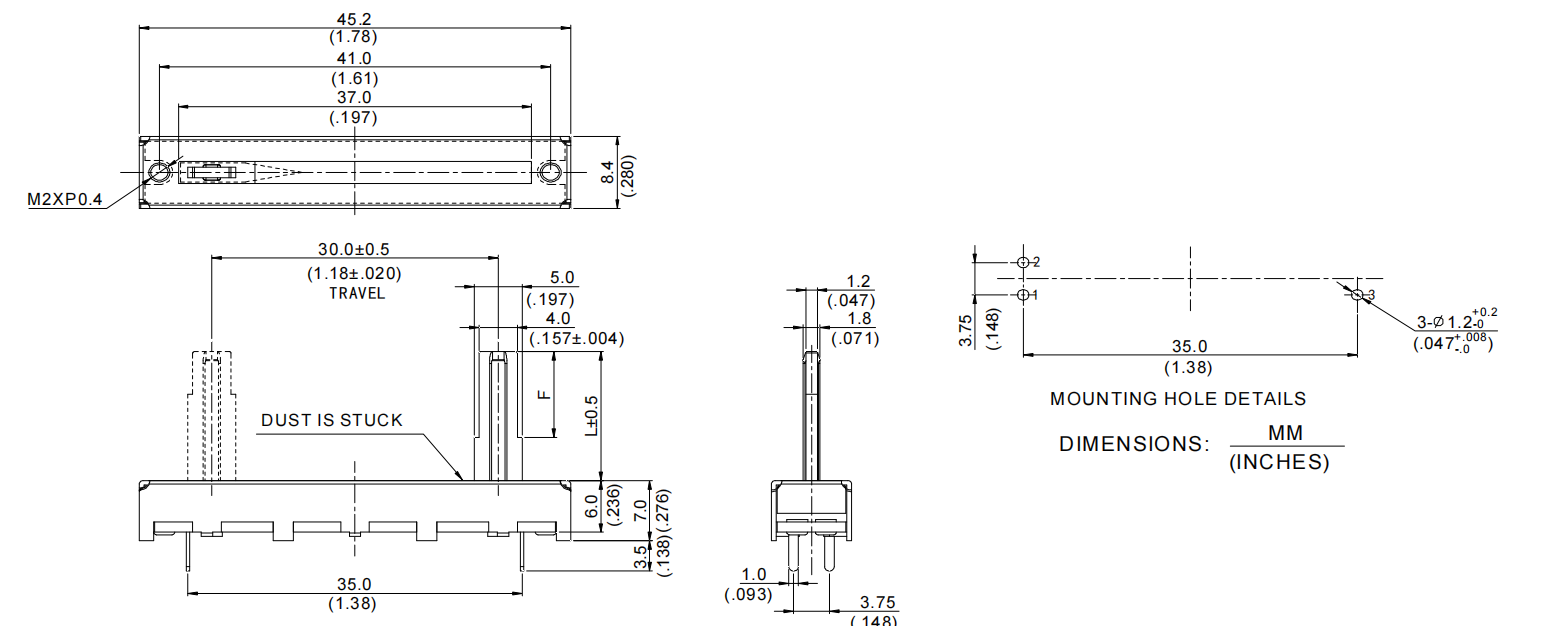
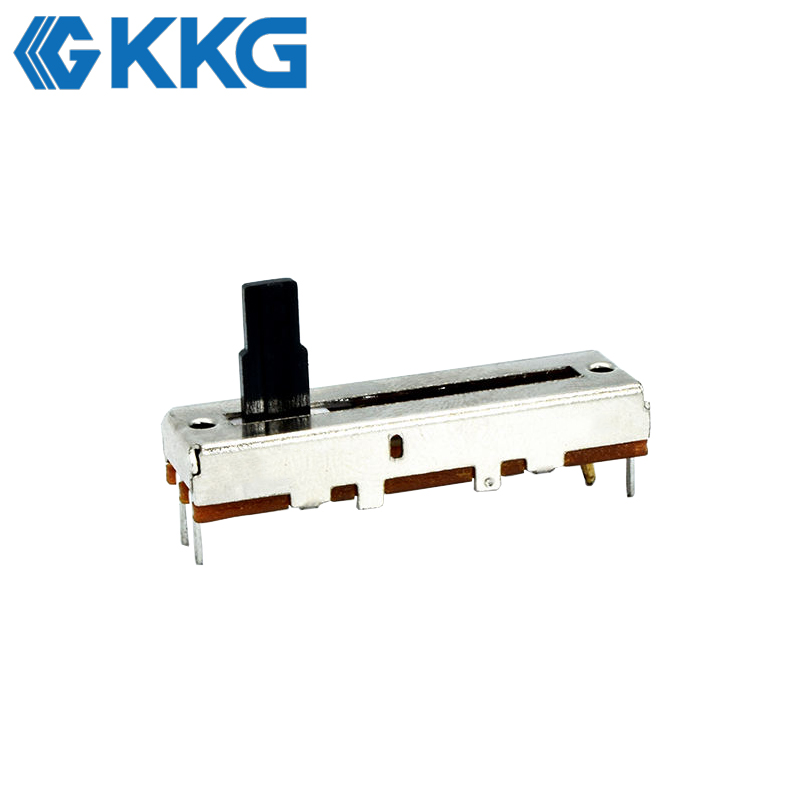
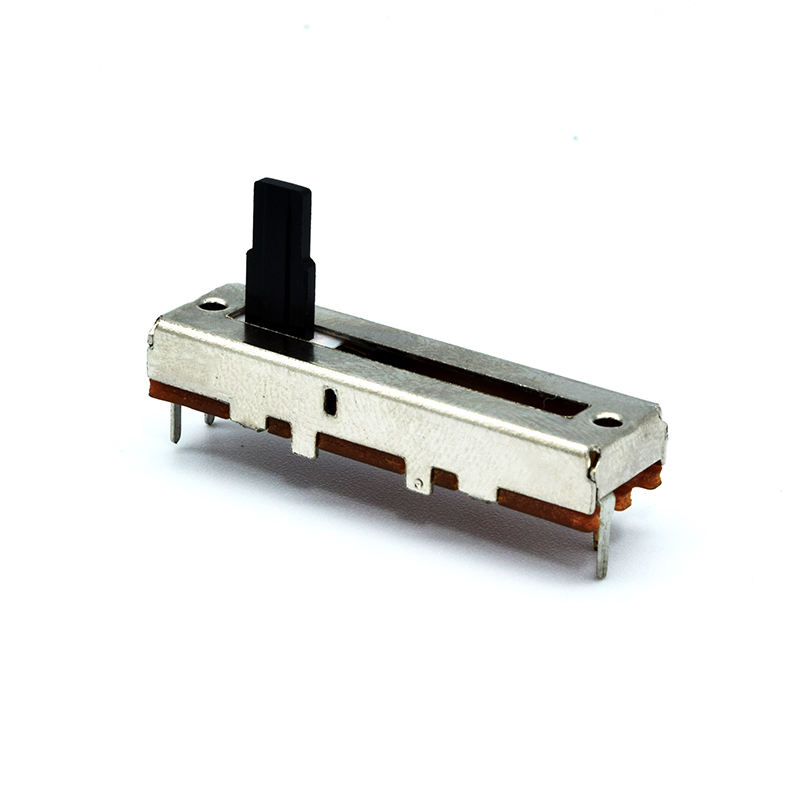
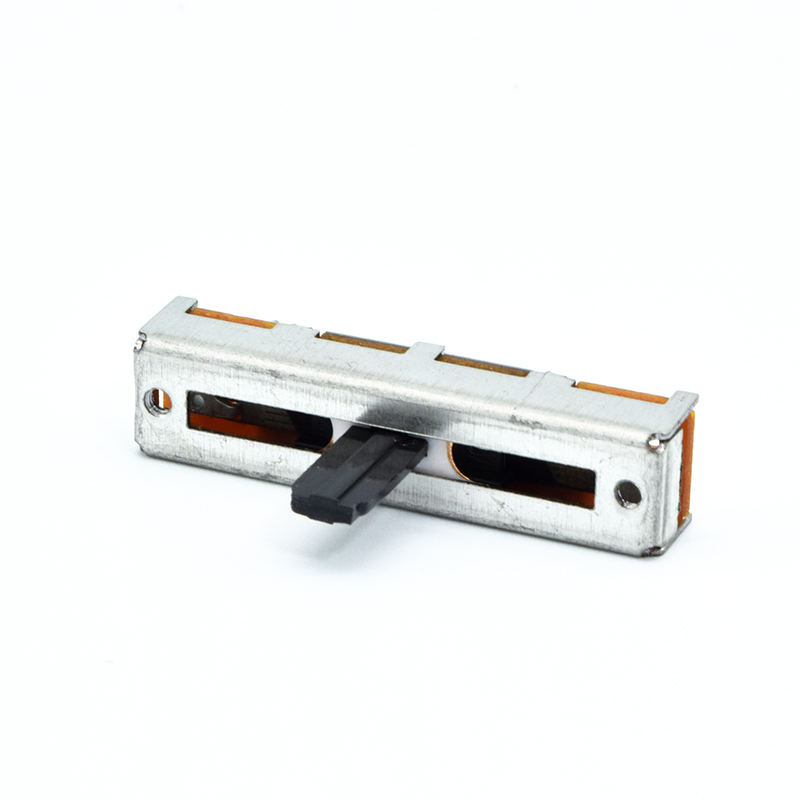
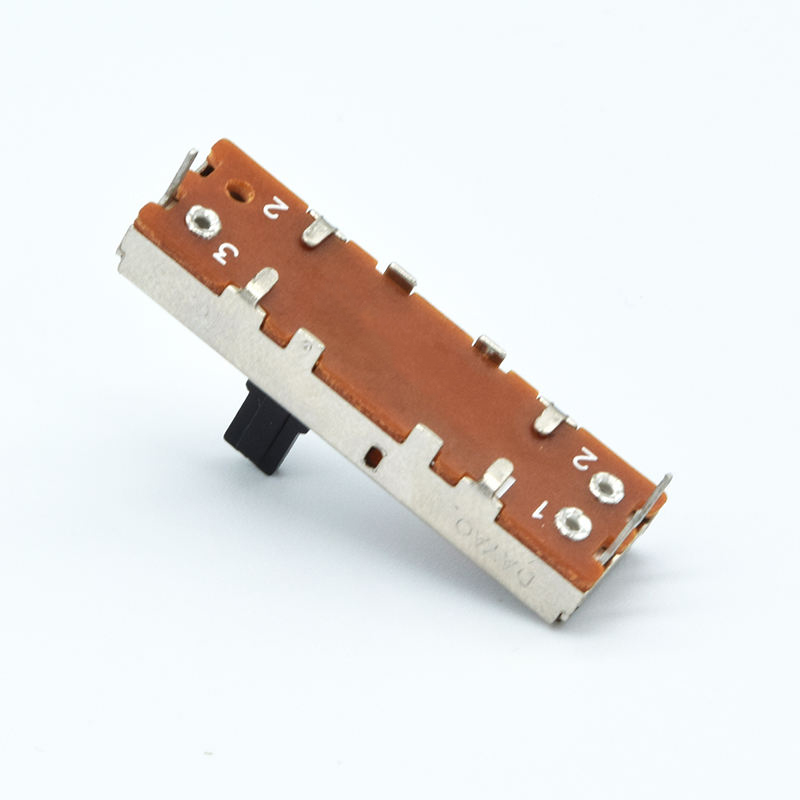
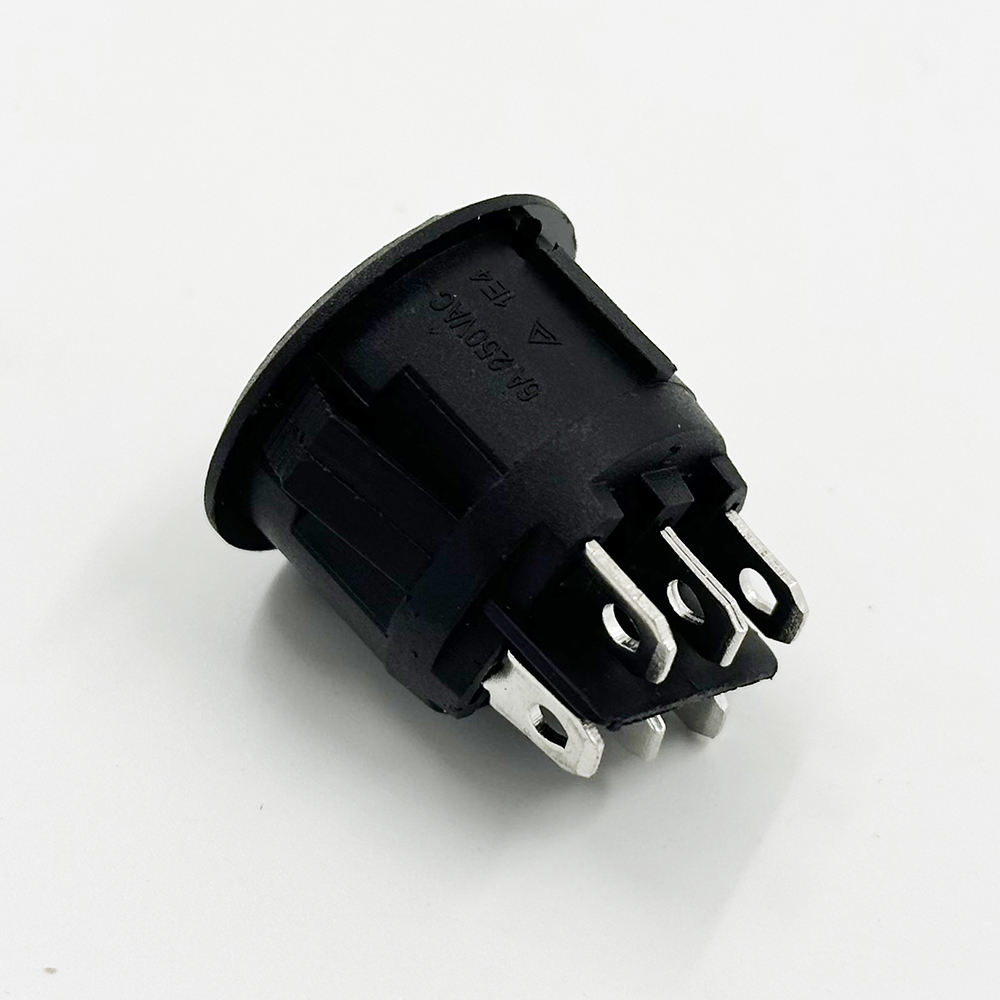
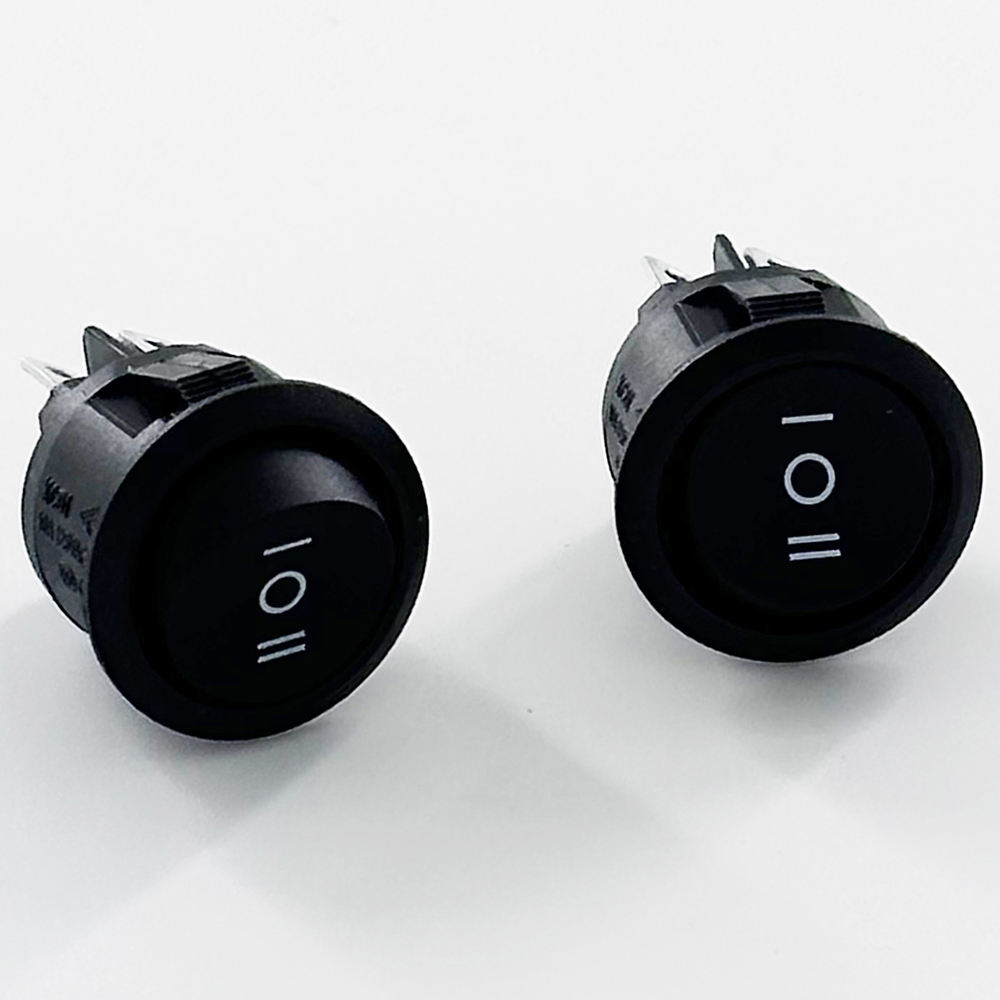
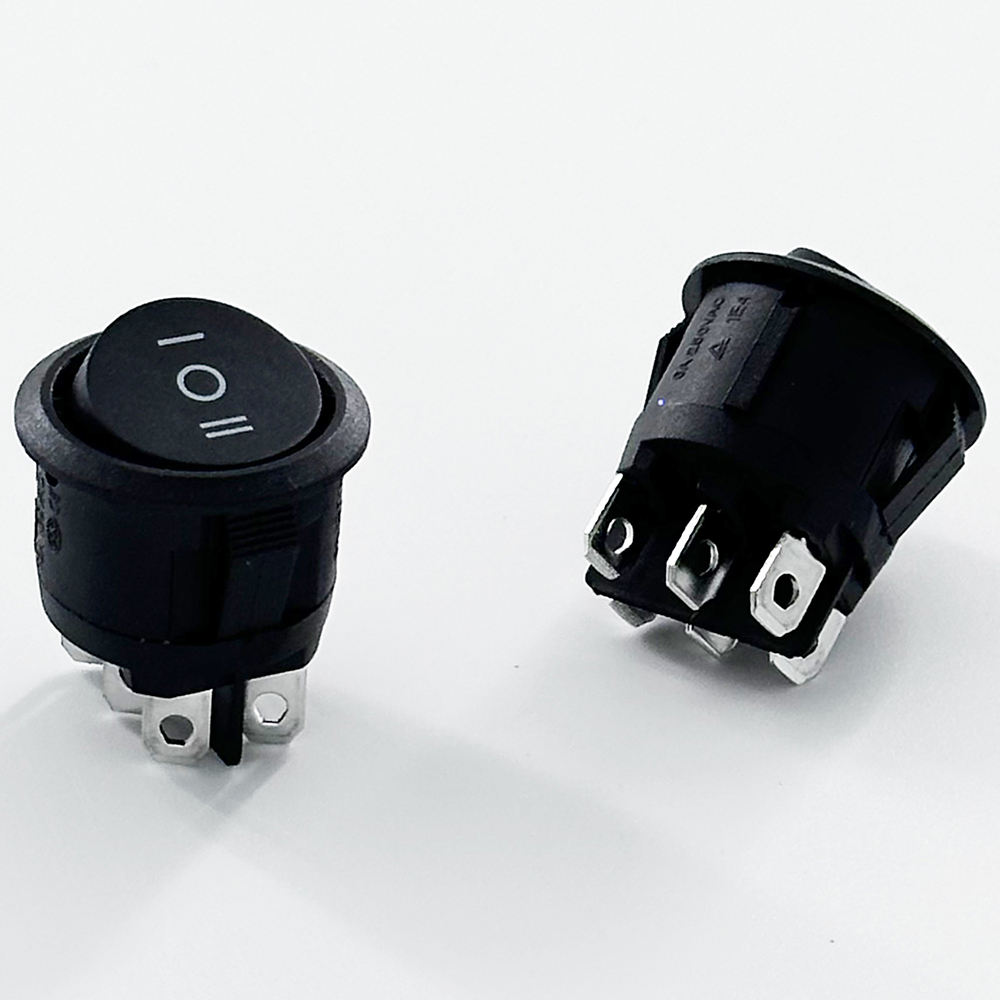
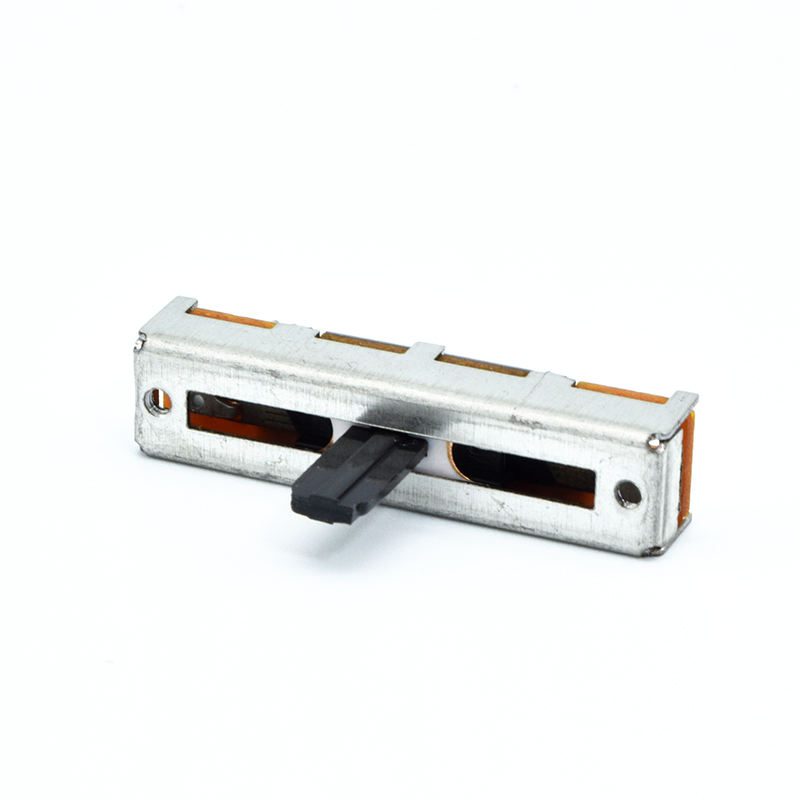
The Slide Potentiometer is a variable resistor designed to provide smooth and precise electrical adjustment through linear sliding movement. By moving the slider along the resistive element, the resistance value and corresponding electrical output can be adjusted according to the requirements of the circuit.
With stable electrical contact, precise adjustment performance, and a compact structure, slide potentiometers are suitable for applications requiring convenient linear control of electrical parameters. They are commonly used in audio equipment, electronic instruments, lighting controls, industrial control systems, and other electronic devices.
Slide Potentiometer Specifications
| Parameter | Specification |
|---|---|
| Shaft Rotation Force | 15gf·cm~150gf·cm |
| Insulation Resistance | 10 MΩ Min. at 250 VDC |
| Withstand Voltage | AC 300V for 1 minute |
| Rotational Life | 15,000 cycles |
Product Features
Linear Adjustment: The slider moves along the resistive element to provide continuous adjustment of resistance and electrical output.
Precise Control: Supports accurate adjustment of circuit parameters for applications requiring fine electrical control.
Stable Contact: The sliding contact maintains stable electrical contact with the resistive element to help provide consistent output.
Reliable Performance: Designed for stable operation during repeated adjustment and normal operating conditions.
Easy Operation: The linear slider provides intuitive adjustment, making it convenient for applications where users need to visually monitor and control a parameter.
Long Service Life: The specified rotational life reaches 15,000 cycles, supporting repeated adjustment during product operation.
Product Advantages
High Precision: The slide potentiometer enables controlled resistance adjustment, helping users achieve the required electrical parameters with greater accuracy.
Stable Performance: A reliable resistive element and sliding contact structure help maintain stable electrical characteristics during adjustment.
Durable Construction: The component is designed to withstand repeated adjustment and provide dependable performance throughout its specified service life.
Convenient Linear Control: Compared with rotary potentiometers, the linear slider provides a direct visual indication of the adjustment position, making it suitable for applications where intuitive control is important.
Wide Application Range: Slide potentiometers can be integrated into audio equipment, electronic instruments, control panels, lighting systems, and industrial electronic devices.
How Does a Slide Potentiometer Work?
A slide potentiometer consists of a resistive element and a movable sliding contact. When the slider moves along the resistive element, the electrical resistance between the terminals changes according to the position of the contact.
This variable resistance can be used to control voltage, signal level, or other electrical parameters within a circuit. For example, when connected as a voltage divider, moving the slider changes the output voltage. The linear movement therefore provides a direct and convenient method for adjusting an electrical signal.
The actual resistance characteristics depend on the resistive element, resistance value, taper, travel length, and other product specifications. Slide potentiometers are available in different configurations to meet the requirements of specific electronic applications.
Product Functions
Resistance Adjustment: Changes the effective resistance in a circuit through linear movement of the sliding contact.
Signal Level Control: Adjusts the level of electrical signals in suitable audio and electronic circuits.
Voltage Adjustment: Can be used as part of a voltage-divider circuit to provide variable output voltage.
Parameter Calibration: Helps engineers and users fine-tune electrical parameters during equipment setup and calibration.
Linear Position Control: Provides a direct relationship between slider position and electrical adjustment in applications using a suitable linear taper.
Product Applications
Audio Equipment
Slide potentiometers are widely suitable for audio control applications such as mixing consoles, amplifiers, synthesizers, and other audio equipment. The linear slider allows users to adjust signal levels conveniently and observe the adjustment position directly.
Electronic Instruments
They can be used in electronic instruments and test equipment where adjustable electrical parameters are required for setup, calibration, or control.
Lighting Control
Slide potentiometers can be integrated into suitable lighting control systems for user adjustment of brightness or other variable control parameters.
Industrial Control Systems
In industrial electronic equipment and control panels, slide potentiometers can provide manual adjustment of selected control parameters and feedback settings.
Consumer Electronics
Their intuitive linear operation makes slide potentiometers suitable for various consumer electronic devices that require convenient manual adjustment.
Medical and Laboratory Equipment
Slide potentiometers can be used in suitable medical and laboratory equipment for controlled adjustment and calibration functions where the specified electrical and mechanical characteristics meet the equipment requirements.
Why Choose a Slide Potentiometer?
A Slide Potentiometer is a practical choice when an application requires direct and intuitive linear adjustment. The slider position provides a clear visual indication of the selected setting, while the variable resistance enables continuous electrical control.
With a 15gf·cm~150gf·cm operating force, minimum 10 MΩ insulation resistance at 250 VDC, AC 300V withstand voltage for 1 minute, and 15,000-cycle specified life, this component provides a reliable solution for a variety of electronic control applications.
FAQ
What is a slide potentiometer?
A slide potentiometer is a variable resistor that changes its resistance through the linear movement of a sliding contact along a resistive element. It is commonly used for signal, voltage, and parameter adjustment.
What is the main advantage of a slide potentiometer?
Its main advantage is intuitive linear control. The physical position of the slider provides a clear indication of the adjustment level, making it convenient for applications requiring frequent manual adjustment.
What is the insulation resistance?
The specified insulation resistance is 10 MΩ minimum at 250 VDC.
What is the withstand voltage?
The specified withstand voltage is AC 300V for 1 minute.
What is the service life of the slide potentiometer?
The specified rotational life is 15,000 cycles.
Where are slide potentiometers commonly used?
Slide potentiometers are commonly used in audio equipment, electronic instruments, lighting control systems, industrial control panels, consumer electronics, and other devices requiring linear electrical adjustment.