




Wireless microphones require reliable and compact control components to ensure smooth operation during performances,conferences,karaoke,and professional audio applications.Among the different SWITCH options available,Tactile Switches and Push Button Switches are two common choices used for controlling functions such as power,mute,pairing,and mode adjustment.
Although both switches serve similar purposes,their structure,operating experience,installation method,and application advantages are different.For wireless microphone manufacturers,understanding the differences between a tactile switch for wireless microphone and a push button switch is essential for selecting the right component.
This article compares tactile switch vs push button switch for wireless microphone applications to help engineers and buyers make a better choice.
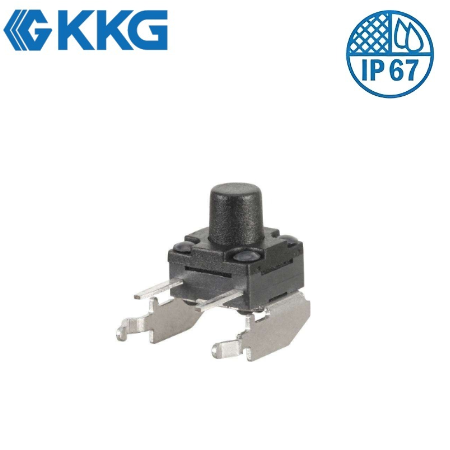
What Is a Tactile Switch for Wireless Microphone?
A tactile switch is a small momentary switch that provides a noticeable click feedback when pressed.It is commonly mounted directly onto a printed circuit board(PCB)and activates only while the button is being pressed.
In wireless microphones,tactile switches are mainly used for:
Power control
Mute function
Channel selection
Frequency adjustment
Pairing operation
Function switching
Because of their compact structure,mini tactile switches and SMD tactile switches are widely used in modern wireless audio devices.
Main Features of Tactile Switch:
Compact size
PCB mounting design
Quick response
Low power consumption
Clear tactile feedback
High operation reliability
What Is a Push Button Switch?
A push button switch is a mechanical switch operated by pressing a button.Depending on the design,it can be momentary or maintained.
Push button switches are commonly used in larger electronic devices where stronger mechanical operation or visible controls are required.
In wireless microphone applications,push button switches may be used for:
Power activation
External control buttons
Heavy-use functions
Panel-mounted designs
Main Features of Push Button Switch:
Larger mechanical structure
Strong pressing feeling
Flexible mounting options
Suitable for frequent physical operation
Higher mechanical strength
Tactile Switch vs Push Button Switch:Key Differences
| Feature | Tactile Switch | Push Button Switch |
|---|---|---|
| Size | Small and compact | Larger |
| Installation | PCB mounting | Panel mounting or PCB mounting |
| Operation Feeling | Short click feedback | Longer pressing travel |
| Space Requirement | Low | Higher |
| Cost | Generally lower | Generally higher |
| Design Flexibility | High for compact devices | Better for larger controls |
| Durability | High for electronic applications | High for mechanical applications |
1.Size and Space Requirements
Tactile Switch Advantage
Wireless microphones are designed to be lightweight and portable.Internal space is usually limited because manufacturers need to integrate:
Battery modules
Wireless transmission circuits
Audio processing components
Charging circuits
A mini tactile switch requires very little PCB space,making it ideal for compact microphone designs.
Push Button Switch Consideration
Push button switches generally have larger bodies and require more installation space.
They may be suitable for:
Large microphone transmitters
Professional control equipment
Devices with external buttons
Winner:Tactile Switch
For compact wireless microphone designs,tactile switches offer better space efficiency.
2.User Feedback and Operation Experience
The feeling of pressing a switch directly affects user experience.
Tactile Switch
Advantages:
Clear click response
Short travel distance
Quick activation
Prevents uncertain operation
Users can easily confirm whether the button has been pressed.
Push Button Switch
Advantages:
Strong mechanical feeling
Longer travel
Easier operation with gloves or larger fingers
For applications requiring a more obvious button action,push button switches may provide better feedback.
Winner:Depends on Application
Compact electronic products→Tactile switch
Heavy-duty operation→Push button switch
3.Durability and Service Life
Wireless microphones are frequently operated in:
Concerts
Live events
Recording studios
Educational environments
The switch must withstand repeated use.
Tactile Switch Durability
High-quality PCB tactile switches can provide:
Stable electrical contact
Long operation life
Consistent pressing performance
Push Button Switch Durability
Push button switches usually have stronger mechanical structures and may handle heavier physical pressure.
However,larger mechanical parts may experience wear over time.
Winner:Tie
Both can provide excellent durability when properly selected.
4.Electrical Performance
Both tactile switches and push button switches can support low-voltage electronic circuits,but their designs differ.
Tactile Switch Advantages:
Low contact resistance
Fast signal response
Suitable for PCB circuits
Good compatibility with microcontrollers
Push Button Switch Advantages:
Available in higher current ratings
Suitable for direct power control
More options for external circuit applications
For wireless microphones with digital control systems,tactile switches are usually preferred.
Winner:Tactile Switch
5.Manufacturing and Assembly Efficiency
For mass production of wireless microphones,assembly efficiency is important.
Tactile Switch Benefits:
Designed for automated PCB assembly
Compatible with SMT production
Easy quality control
Reduced assembly cost
Push Button Switch Benefits:
Flexible mechanical installation
Suitable for customized housing designs
For large-scale electronic production,SMD tactile switches usually provide better manufacturing efficiency.
Winner:Tactile Switch
When Should You Choose a Tactile Switch for Wireless Microphone?
A tactile switch is the better choice when the product requires:
Compact size
Lightweight design
PCB integration
Low power consumption
Fast button response
High-volume production
Typical applications:
Wireless microphones
Bluetooth microphones
Karaoke microphones
Portable audio devices
Smart audio products
When Should You Choose a Push Button Switch?
A push button switch may be more suitable when:
The product has enough internal space
Strong mechanical feedback is required
Users need larger buttons
The switch is frequently pressed with higher force
Typical applications:
Professional audio consoles
Large microphone transmitters
Control panels
Industrial audio equipment
How to Choose the Right Switch for Wireless Microphone Production?
Before selecting a switch,manufacturers should consider:
1.Product Size
For compact wireless microphones:
→Choose mini tactile switch or SMD tactile switch.
For larger devices:
→Push button switch can be considered.
2.Function Requirements
Different functions may require different switch characteristics:
| Function | Recommended Switch |
|---|---|
| Power button | Tactile switch / push button switch |
| Mute button | Tactile switch |
| Pairing button | Tactile switch |
| External control | Push button switch |
3.Production Volume
For high-volume manufacturing,consider:
Assembly efficiency
Component availability
Cost control
Supplier stability
A professional tactile switch manufacturer can provide customized solutions based on product requirements.
Custom Tactile Switch Solutions for Wireless Microphones
For wireless microphone brands,standard switches may not always meet specific design requirements.Custom solutions can include:
Customized switch size
Different operating force
Various button heights
Special terminal structures
Waterproof designs
Long-life performance options
Working with an experienced tactile switch supplier helps manufacturers achieve better product reliability and consistent quality.
When comparing tactile switch vs push button switch for wireless microphone,tactile switches are generally the preferred choice for modern compact audio devices because they offer smaller size,efficient PCB integration,reliable operation,and excellent user feedback.
However,push button switches still have advantages in applications requiring stronger mechanical operation and larger control interfaces.
For wireless microphone manufacturers,the best choice depends on product design,operating environment,and performance requirements.Selecting a reliable tactile switch manufacturer ensures high-quality components and customized solutions for different audio applications.
FAQ
Q1:Is a tactile switch better than a push button switch for wireless microphones?
For most modern wireless microphones,tactile switches are preferred because they are smaller,easier to integrate into PCBs,and provide reliable performance.
Q2:Can a push button switch replace a tactile switch?
Yes,but the replacement depends on available space,PCB design,electrical requirements,and user experience expectations.
Q3:Which switch has a longer lifespan?
Both can offer long service life.The actual lifespan depends on materials,design quality,and operating conditions.
Q4:Are tactile switches suitable for professional audio equipment?
Yes.Many professional audio devices use tactile switches because of their compact design and reliable signal control.